February 2026

Contents
February 2026 • Vol. 2, Nr. 2
Editorial Dept.
Annie Mydla
Sol Iacob
Cover
Annie Mydla
Annie Mydla
By Annie Mydla
Autism and Data
Analytics Products Will Never Be Truly Human-Centered Until the Workplaces Behind Them Are by Valerie Casalino
Analytics Products Will Never Be Truly Human-Centered Until the Workplaces Behind Them Are by Valerie Casalino
Fan Fiction
An Episode of Winnie the Pooh: "Pooh Goes to School" by Christina Donaldson
An Episode of Winnie the Pooh: "Pooh Goes to School" by Christina Donaldson
Short Story
Funeral Admin by Gina Raymond
AuDHDers: Work for Yourself Without Burning Out! by Autism Chrysalis
Unmask and Connect by Mary Pasciak
Comics
Bathrobe Gal: What's up with all the standing and sitting? by Sarah Jane Cody
Sticker
You Are Okay! by Elissa Fox
About Autistic Women's Group
Established 2021
AWG is an online support group for late-identified autistic women and all other members of marginalized genders.
The meeting format is designed to reduce the sensory, social, and executive function burdens that normally come with socializing. Our members are clinically-diagnosed, self-diagnosed, and questioning. AWG is volunteer-led and not associated with any other umbrella organization or company.
Please consider joining us on Zoom. Our member profile is inclusive. Meetings are always free and no registration is required. Members share by speaking or typing. We have many members who come just to listen. You never have to turn on you mic or camera if you don't want to. You don't have to come to every meeting, or stay the whole meeting, in order to be a full member. Disclosure of diagnosis/gender identity is welcome but never required for participation.
Click her to learn more about attending a meeting. You can also...
- See upcoming meeting topics
- Sign up for meeting reminders (scroll the homepage to find the signup form)
- Join the AWG subreddit for weekly meeting reminders
- Join our sibling meetings: the AWG Self-Esteem Group, Book Club and Connecting Hour, and Discord server
I hope you enjoy AWG Shares Magazine. And please do join us in a meeting sometime if you can.
Annie Mydla
Founder and facilitator, AWG
About this month's cover
"Przy ogniopoju" ("Before the Fire-Giving Hole") is an assemblage by sculptor Władysław Hasior (1928-1999). See more of Hasior's work here: https://english.hasior.pl/works/ or submit some art that you would like to see on a cover! https://autisticwomensgroup.com/submit - Annie
Autism and Data
Analytics Products Will Never Be Truly Human-Centered Until the Workplaces Behind Them Are
Valerie Casalino
https://www.valerieccreates.ca/
"I was in my twenties, with undiagnosed neurodiversity, zero concept of needs and boundaries, and overwhelmed, confused, and exhausted... My mom's funeral was on a Friday. I went back to work on Monday. I finished developing and testing the report—and from what I remember, everyone received it when expected. I’m not sure if it felt like 'a win' for me. It made me question, how are analytics workers perceived? And, what did I just do?"
This article was previously published in Nightingale, the journal of the Data Visualization Society, in December 2025. View the original at https://nightingaledvs.com/analytics-products-never-human-until-workplaces-are/
I’ve been really excited to see a shift in analytics and business intelligence around more integration of human-centred design, ethics, and accessibility.
I learn something new almost every day. However, I feel something is still missing from these conversations: whether these are being considered beyond the interface, and in our workplaces too.
From what I’ve experienced and witnessed working in analytics, I don’t think I see the same strides in how analytics work gets done. For example, how many of us have kept producing while our lives were going through upheaval? How many have wondered if we can stay in our jobs, or even careers, because the way we’re expected to work is unsustainable to our well-being and personal lives? What might happen if we approach our work in a way that decenters speed, volume, and heroics, and recenters all humans involved?
My early days
I discovered data visualization in undergrad while studying cases like the Three Mile Island nuclear accident, where poor information design contributed to near or actual harm. It was one of the first moments in engineering where my ears perked up, especially around how data visualization bridges the analytical, creative, and human. My early roles in quality improvement in hospitals only deepened that passion. I was fortunate to work alongside clinicians, designers, and researchers who introduced me to co-design methods, the importance of evaluation, and reframed users as collaborators. Eventually, I landed my first role on an analytics team to support with BI design and development. However, it was during a time when my mom was battling appendix cancer, and I was living at home to support with caregiving. And my passion for this work quickly collided with the realities of how analytics gets done.
Deadlines versus trauma
When my mom was admitted to palliative care a year later, it happened to line up closely with a due date for a “high-stakes” report I was responsible for developing in Tableau, which I was learning how to use on my own. Because of the project’s size and weight, and the responsibility I felt to deliver, I would work a full day, bring my laptop to hospice care, and continue working near her bedside.
I could have asked for an extension or support. However, analytics routinely feels like a pressure cooker, especially on “high-stakes” projects. Plus, my qualifications were openly being questioned by others, I was identified as one of the “single points of failure”, and was also cautioned about the potential for blame if anything went wrong. Stepping away didn’t truly feel like an option – it was easy to feel cornered. On top of that, I was in my twenties, with undiagnosed neurodiversity, zero concept of needs and boundaries, and overwhelmed, confused, and exhausted.
At my mom’s funeral, a colleague asked when I might return to work, and relayed that people were getting anxious about report delivery.
Her funeral was on a Friday. I went back to work on Monday. I finished developing and testing the report—and from what I remember, everyone received it when expected. I’m not sure if it felt like “a win” for me. It made me question, how are analytics workers perceived? And, what did I just do?
Breaking points
The elements of that experience were not isolated to any individuals, teams, or organization, but recurring threads I’ve encountered and witnessed time and time again as my career in analytics has progressed.
Fast-forward many years later to a more recent contract, again as a BI designer and developer, where layers of challenging, but common, systemic pressures rattled my nervous system. I eventually had a major Autistic shutdown (an involuntary neurological response to sensory overload), and needed to leave.
I’ve listed some of the challenges below – do any of these resonate, neurodiverse or not?
Structural
- Unclear or missing roles, scoping, processes, and standards
- Unrealistic expectations around task complexity and timelines
- Unpredictability requiring frequent context switching and quick adaptation to change
Cultural/interpersonal
- Persistent state of urgency, with hustle and “just get it done” culture
- Lack of autonomy and space, with ongoing progress checks and pressure points
- Repeatedly having to overexplain, raise concerns, and justify boundaries
- Interdepartmental conflict and tension
- Feeling held responsible for the success of the project
Environmental
For this experience, I was able to be fully remote. From research and my own previous jobs, I know several factors that can be challenging with in-office environments for Autistic workers. These can include adherence to a 9 – 5 schedule, open concept office spaces with bright lighting and noise, and pressure to attend social functions.
When layers like these start to compound, my nervous system gets flooded with input and demands, and can’t catch up. I get stuck in survival mode, and eventually break or shut down. Autistic burnout can look very different from our typical understanding of burnout, and recovery can require weeks to months (or even years) of deliberate care. Just to note, other Autistic people may have different experiences, supportive conditions, and responses – these are just my own. aces with bright lighting and excessive noise, constant interruptions, and pressure to attend social functions.
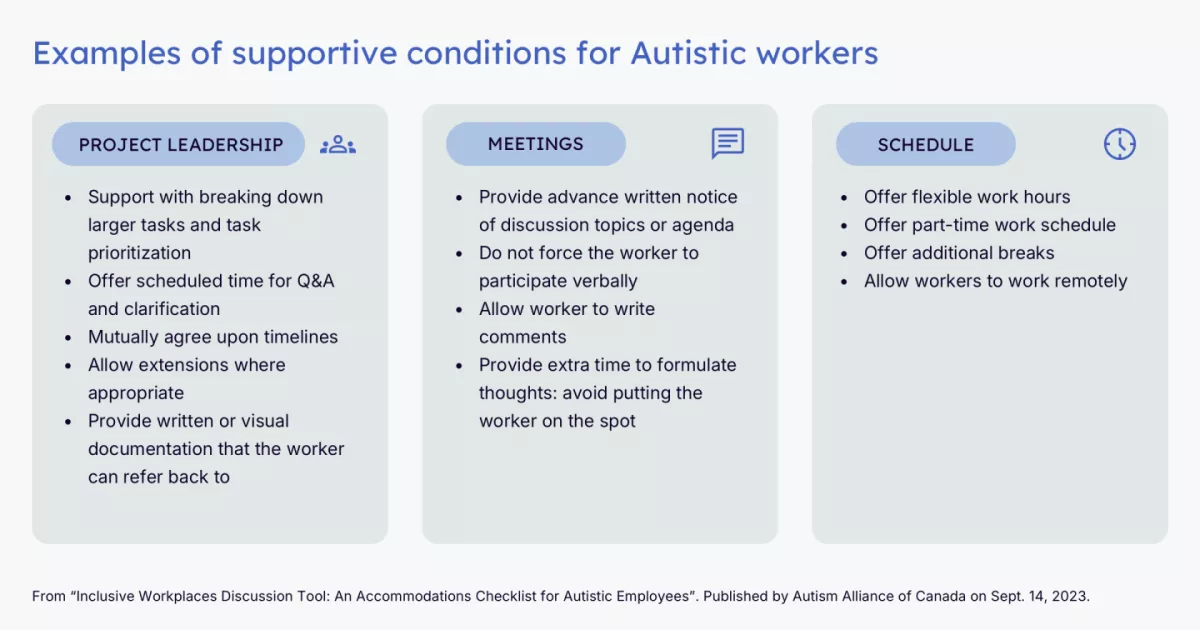
Figure 1. Examples of supportive conditions for Autistic employees from a 2023 report by Autism Alliance Canada. It is important to note that Autistic employees and employers can work together to identify the supports that might work best.
At this point, I’m afraid of returning to analytics as it currently exists. It can feel inaccessible to neurodivergence, and unforgiving to responsibilities outside of work. But am I the only one who feels this way?
Ripple effects: Tired teams, leaders, products, and users
From what I’m seeing across industry research, I don’t think I’m the only one finding this field challenging and unsustainable. Here are some highlights:
Data teams are already overcapacity, despite ever-growing demands
In a 2023 survey of more than 900 data team practitioners and leaders across the United States and the United Kingdom, 84% said their workload exceeded their capacity, and 90% reported that it had increased from the year prior.
The vast majority of data engineering teams feel burnt out
Another survey of over 600 data engineers and managers found that nearly all of them (97%) reported feeling burnt out, primarily due to time spent fixing errors, maintaining data pipelines, and constantly playing catch-up with stakeholder requests. Nearly 90% reported frequent work-life disruptions. 70% said they were likely to leave their current company within a year, and almost 80% were considering leaving the field altogether.
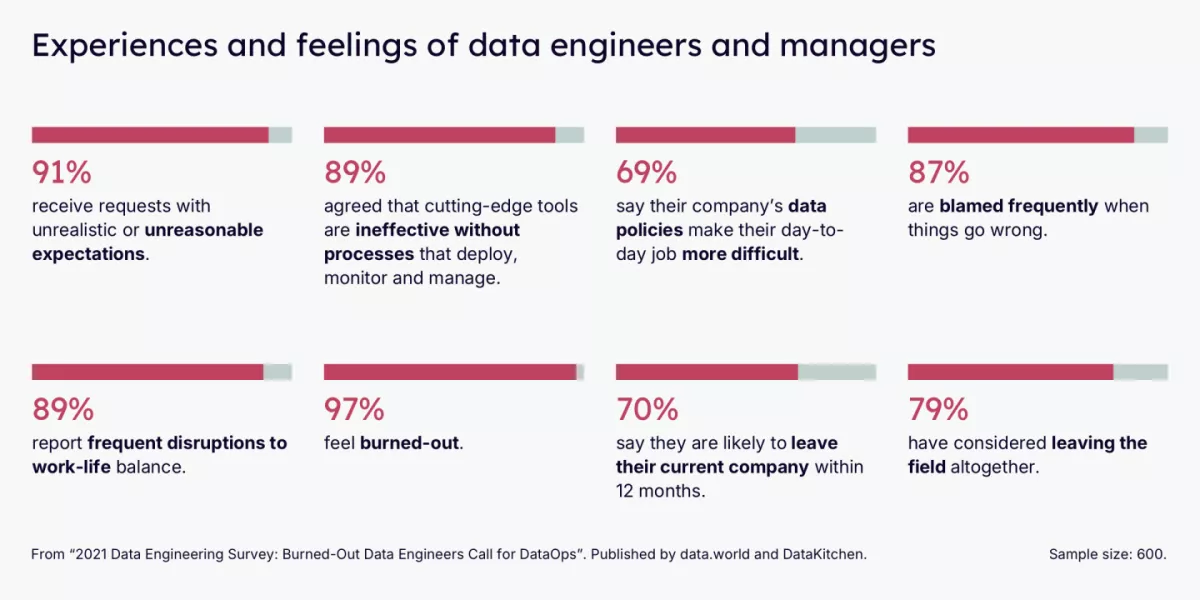
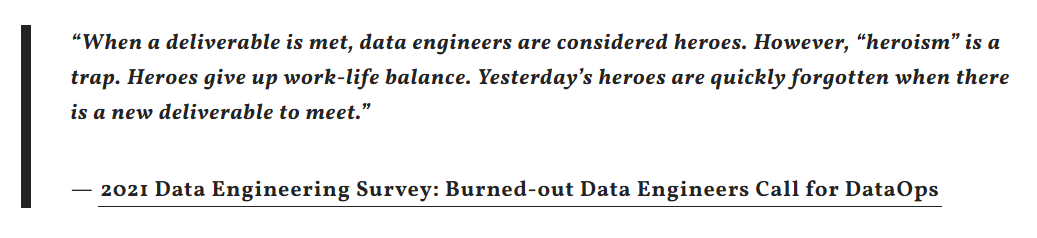
Figure 2. Experiences and impacts of data analytics work on data engineers from a 2021 report by data.world and DataKitchen.
Analytics products aren’t sufficiently supporting our end users
In a 2025 survey of more than 200 product leaders, data teams, and executives, 40% said their data doesn’t support decision-making sufficiently, 51% can’t meaningfully interact with the data provided, and 29% export data to spreadsheets daily.
Findings I’m not surprised to see, considering how we’re expected to work. From a design perspective, it can be a struggle to carve time and space to sufficiently understand the data and users before I’m asked to quickly turnaround a prototype. Plus, post-launch follow-up and evaluations don’t seem to gain traction before we’re onto the next priority.
We’re hoping AI will save us
In the same survey as above, 75% believe AI-powered analytics might finally help uncover value buried in data. But in a new study by MIT and Snowflake, 77% of data engineering teams are finding their workloads even heavier, despite AI integration.
While AI has the potential to streamline tasks and improve product quality, a cracked foundation could limit its impact, and cause further complexity and burnout.
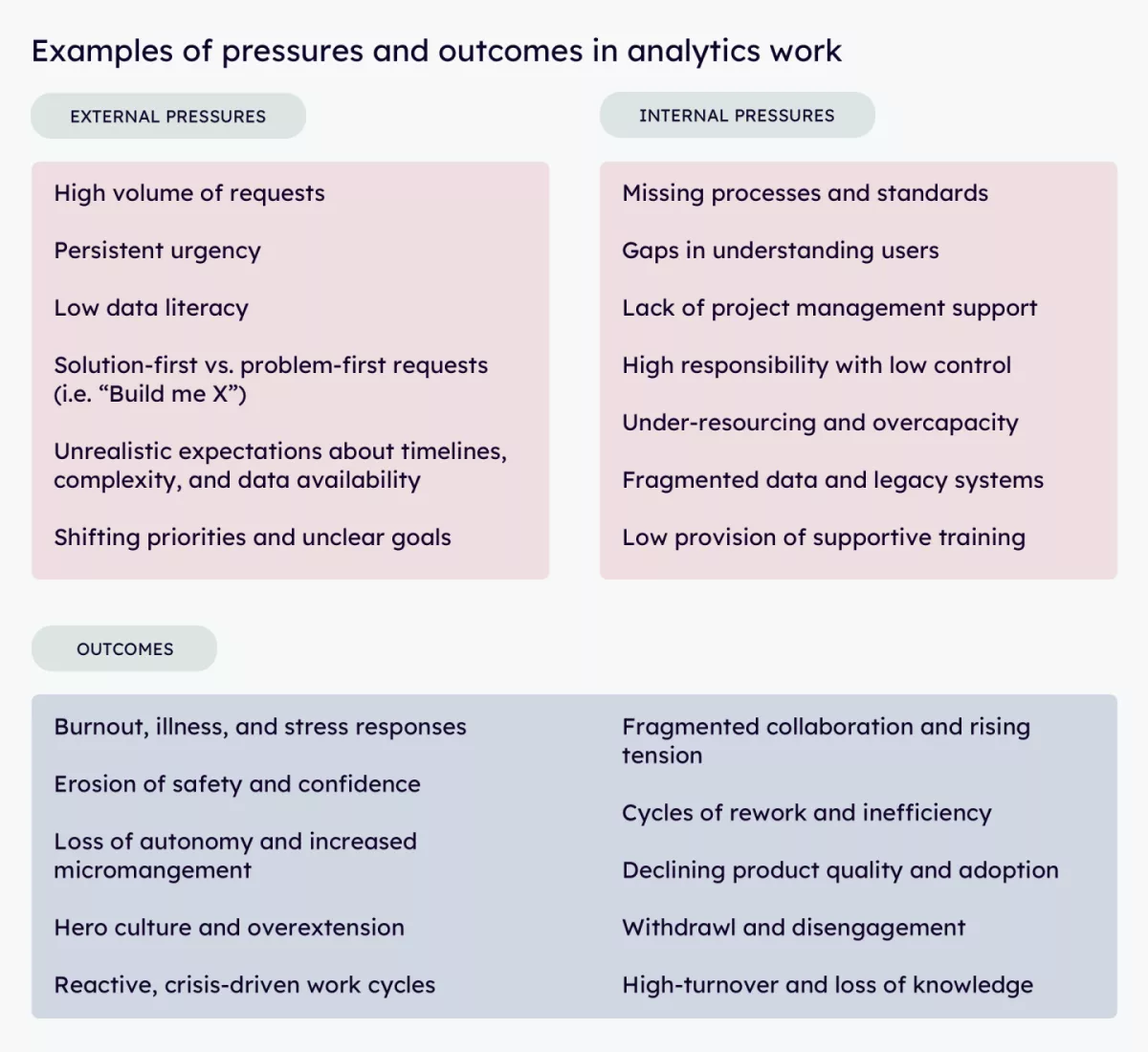
Figure 3. Examples of external and internal pressures in analytics, as well as possible outcomes.
Diverse does not equal inclusive
In analytics, we often point to diversity as evidence that we’re on the right path. When concerns are raised about how pressures, workloads, and expectations may weigh differently across identities, they can be dismissed with the reassurance that our workplaces are “already pretty diverse.”
That might be partially true in terms of representation. A recent study by Statistics Canada showed that 60% of data scientists (one of many roles within analytics) are immigrants, with the majority of first languages being neither English nor French. About one-third of data scientists identify as women+ (defined by the study to include “women and some non-binary people”).
It is important to recognize that diversity does not always equal inclusion. In other pieces published by Nightengale, Catherine D’Ignazio and Lauren F. Klein, authors of Data Feminism, speak to how racism and sexism are imbued in the end to end data lifecycle, reinforced by structures of power, and ultimately surfacing in our products. An online poll by Christian Osborne showed that 90% of respondents said that they’ve experienced microaggressions at work, which can cause emotional and psychological harm, decrease job satisfaction, and increase turnover.
We can also be sensitive to trends across all workplaces. In 2024, the Diversity Institute, Future Skills Centre, and Environics Institute for Survey Research published a Canada-wide study on gender, diversity, and discrimination at work. The survey reinforces that workplace discrimination is more likely to be experienced by racialized and Indigenous peoples, women, persons with disabilities, 2SLGBTQ+ individuals, and young adults. It is crucial to recognize that intersectionality amplifies these effects, with racialized and Indigenous people more likely to face multiple forms of discrimination, especially related to gender, age, and disability. And, those who reported experiencing discrimination also reported poorer mental health.
Even with diversity, we still need to ensure that our analytics workplaces make everyone feel safe, healthy, empowered, and valued. Diversity, equity, and inclusion (DEI) programming remains urgent and necessary, and should not be deprioritized or defunded. In the systemic pressures previously discussed, I wonder how these are felt across different identities. For example – what are the experiences of a woman in a leadership role, a recent immigrant who is supporting family both at home and overseas, or a new grad with one or more disabilities – are they really all the same?
What if we worked differently, and prioritized people first?
The tendency for analytics workplaces to be top-down, reactive, chaotic, transactional, and overburdening clearly isn’t working—not for our people, and not for our products. We’ve got more than enough burned out workers and leaders, and more than enough underused products to prove it. And I’m only seeing signs that analytics (and tech more broadly) might be becoming even more unsustainable—from 996 culture, mandatory RTO policies, pressure to upskill for AI, low data readiness for AI, to the defunding of DEI.
I think systemic change (or a reset button) is required to humanize our approach to analytics work. The shift has to include not only analytics teams, but also the ecosystems that rely on us.
For example, earlier this year, the Canadian Occupational Health and Safety Magazine suggested that workplaces adopt a trauma informed care (TIC) approach to work. This approach places safety, trust, and empowerment at the center, and recognizes that many of us have experienced trauma—trauma that workplaces can trigger, perpetuate, or even create. Normalized approaches to analytics work can actually be quite harmful, like unpredictability, constant urgency, ambiguity, and the erosion of autonomy.
The article references the six pillars of TIC laid out by the Substance Abuse and Mental Health Services Administration (SAMHSA), and cites research that shows its positive impacts to employee well-being, satisfaction, retention, operational functionality and effectiveness, and cost efficiency.
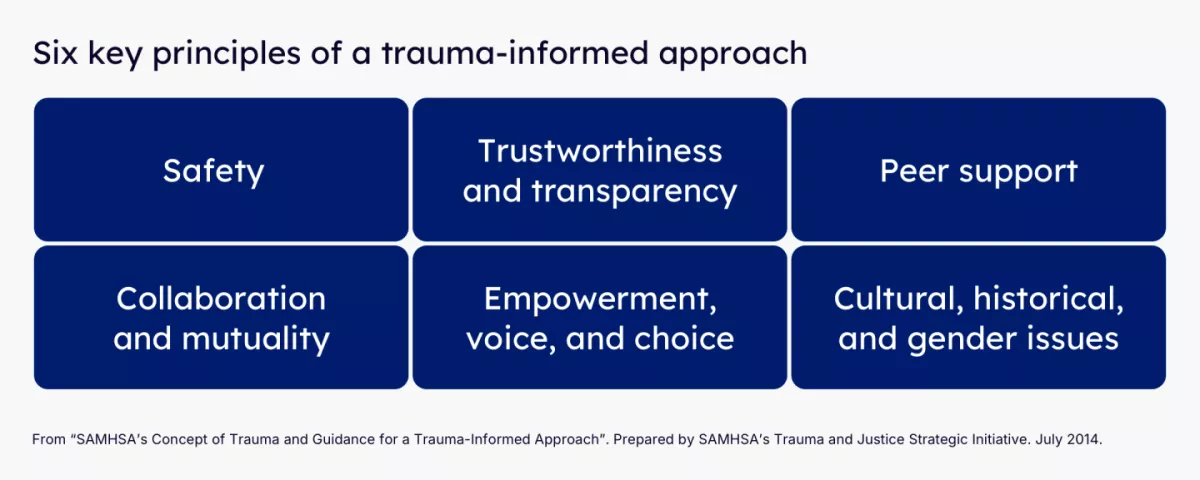
Figure 4. Six key principles of a trauma-informed approach, published by the Substance Abuse and Mental Health Services Administration (SAMHSA).
I have listed the six pillars from SAMHSA below, along with my attempt at (extremely) high-level and brief descriptions tailored to those of us working in analytics. I am still on my own learning journey.
- Safety: Prioritize physical and psychological safety in all elements of the workplace. In analytics, this can mean that people are able to seek clarity, name concerns, and admit uncertainty without fear of punishment or loss of credibility. It can also mean that we respect limits on things like working hours, cognitive load, personal space, and sensory needs.
- Trustworthiness and Transparency: Build trust through consistent transparency around decisions, timelines, priorities, and changes. Clarity and predictability can reduce uncertainty, prevent reactivity, and stabilize teams.
- Peer Support: Reduce isolation and barriers to connection to foster peer support within and across teams. This can allow for greater understanding across disciplines and parts of the organization, smoother workflows, supportive relationships, shared problem-solving, and better knowledge transfer.
- Collaboration and Mutuality: Involve workers in decisions about policies, procedures, tools, standards, and more. Also, when business units and analytics teams better understand each other’s capacities, workflows, complexities, timelines, needs, etc., collaboration might be more smooth, respectful, and productive.
- Empowerment, Voice, and Choice: Choice and control are essential for trauma-impacted people. In analytics, empowerment could mean giving workers more agency in defining things like their own scope, workflows, documentation, timelines, training needs, and work arrangements.
- Cultural, Historical, and Gender Sensitivity: Address systemic inequities and promote diversity, equity, and inclusion. Design systems from the start to acknowledge, understand, and respect differences. Do not rely on people to constantly identify, overexplain, or advocate for their needs.
Integrating TIC is a deep, long-term commitment that isn’t about checking boxes, a quick workshop, or adding a few supportive practices. It requires honest and sustained cultural and structural assessments, learning, planning, and shifts, and a more balanced distribution of power. But with a new reframing, maybe we can begin to view:
- Workers as human, collaborators, creators, and both autonomous and interdependent
- Leaders as human, coordinators, facilitators, coaches, guides, and anchors
- Work as collective, learning, growth-oriented, and sustainable
- Technology as supportive, enhancing, synchronizing, and shared
This isn’t meant to be a silver bullet, and I know there are many other challenges in analytics that involve data, tools, processes, and more. It may also seem overly idealistic in our current systems. But I feel like tech is at a precipice, especially in the rush toward AI creation and adoption. We’re already seeing increased exploitation of labour and the environment in the AI space, without consideration of short or long term consequences. If we don’t care to stop and make our systems more sustainable, ethical, equitable, and accessible now—what does this mean for our (very near) future?
I’m curious about what a different approach to analytics work might bring:
- Will we have the space to maintain our health, relationships, and lives outside of work?
- Will relationships within and between teams become more stable, empathetic, and productive—especially between analytics and business units?
- Will we have more space in between deliverables to recover, reflect, and refine our systems?
- Will our products become clearer, more cohesive, more aligned, actually used, and have impact?
- Will we feel safe and supported to show up at work in our own unique ways?
Want to promote your business, product, or service in AWG Shares? You can!
Promotions are free for everyone who fits our member profile.
Your business doesn't specifically have to be about autism,
but must be welcoming to women and non-cis people
(FTM/MTF trans, nonbinary, genderfluid, autigender, and more).
Email awg@autisticwomensgroup.com or use the submissions form and we'll set up your promotion for the closest upcoming issue.
Fan Fiction
An Episode of Winnie The Pooh: "Pooh Goes to School"
Christina Donaldson
"I have a very exciting announcement to make,” said Pooh.
“Really? What is it, Pooh?”
“Well, Rabbit, I have decided to go to school.”
“School?! But Pooh, you’ve never been a student before. What do you mean by school?”
“School, did I hear someone say school? In my day, school was the epitome of life, the reason for living. I did love school,” said Owl, as he swooped in to join the two.
“Indeed, Owl,” said Pooh. “School is the epitonomy of life.”
“But Pooh, how will you know you’ll even like it if you’ve never been?” questioned Rabbit.
“Oh, I just have a feeling,” smiled Pooh.
“P-p-ooh bear, are you leaving the Hundred Acre Wood to go to school? Gosh, I-I don’t know what I would do without you,” said a nervous Piglet.
“Oh, Piglet, I won’t be going very far at all. The school is just a ways up the road.”
“Well, that’s very good, Pooh. Not only did you find a school for bears but you picked a place that is nearby. Very good. And when does this school start?” asked Piglet.
“Today!” exclaimed Pooh.
“Well now, that’s very short notice you’re giving us, Pooh. What if I had needed you for help in the garden this afternoon?” said Rabbit.
“Well, do you?” asked Pooh.
“Well, no, but--“
“A school that is close by and starts today. Say, I haven’t heard of such a thing. Pooh, what school is this and what will you be studying?” queried Owl.
“I’ll be learning about my favorite thing,” sang Pooh, “Honey.”
“Oh, Pooh that sounds just wonderful. A school to learn about honey, that’s p-p-perfect for a pooh bear like you,” encouraged Piglet.
“I think it sounds ridiculous! Who would teach such a thing?” scowled Rabbit.
“Oh, only our good neighbour Kanga, that’s who,” said Pooh.
“Kanga? Teaching about honey? Well, that seems a little odd,” said Rabbit.
“I love it! Interspecies education, it’s all the craze these days. And with Kanga’s credentials of being a member of the hundred acre wood and having many hours of observing a pooh bear who only eats honey, surely she’ll be an excellent educator,” remarked Owl.
“Well, I’m off! Wish me luck.” Said Pooh.
“Good Luck, Pooh!” they all cried.
Later that day…
“Oh, Pooh, you’re back! How was your class?” said Piglet.
“It was delicious!” Pooh said as he rubbed his tummy.
Short Story
Funeral Admin
Gina Raymond
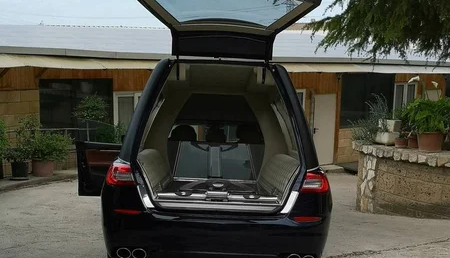
The back parking lot of a funeral home is different than the front. The cracks in the asphalt are deeper.
The weeds are coarser. The bottom of the chain link fence is hidden by pine needles and ribbons of decomposing pizza box. Cigarette butts fill the ashtray of a smoker's pole near the staff exit. In the front lot, autumn mist sprinkles green grass borders. In the back, October drizzle slowly pools in the ashtray. Aside from the coffin itself, waiting on its trolley under the raised white vinyl garage door, the hearse is the only clean and shiny thing out there.
Jenn has been standing by the casket for about fifteen minutes, unsure what to do. The iron rainy smell in the air is pleasant, but why is no one coming to load the casket? Maybe loading is an add-on. It wasn't on the website. It must have never made it onto any of her checklists. The graveside ceremony is starting in an hour.
Sand crackles under her sneakers. The air carries pine and a little salt. The drizzle chills as it dries on her skin. None of these sensations is divisible from the feeling that her brain is screaming.
Her phone vibrates. She checks the screen and puts it back in a pocket, stomach flipping. No spoons for the boyfriend. No spoons for the stressed-out boss. No spoons to cope with a no-spoon afternoon.
Black pines ring the parking lot just beyond the fence. She turns around and cranes her neck. Anyone in any of the black back windows? Can the hearse driver be waiting just out of sight, ready to come out as soon as the casket is loaded? A scene rises in her mind: the driver, the embalmer, the secretary, and the funeral home director just inside the back door, rolling their eyes at each other, waiting for this clueless customer to catch on.
The graveside ceremony is starting in fifty-seven minutes. The cemetery is fifteen minutes from here. Will the trolley move? She gives the nearest wheel a nudge with a sneaker. It shifts with a sandy crunch.
Oh my freaking god, she thinks, looking into the open back of the hearse. There's no way I am doing this. This is just too much.
She'd honestly thought she'd just come to say goodbye. Then she'd found Auntie Deb in the dark on the living room couch with a pillow over her face. And who could blame her. Auntie sure had put in the work over the past five years. A kiss on the forehead and a blanket across Auntie's legs, then upstairs to the sick room to see Uncle Norm's body.
Everyone was right. Bodies do look like they’re sleeping. A glance just long enough to make sure he was really dead, then she shuffled out backwards, closing the door behind her. A longer look might give her chronically 3D-scanning brain time to start working on the room and its inanimate occupant. No, thank you! She didn't want to be carrying that around with her. Even if the corpse in question had once been Uncle Norm.
Back downstairs. The living room was cold, but turning up the thermostat didn't seem like a good idea until they had a game plan.
The trolley sort of tap-bounces against the hearse bumper. Oh shit. But no damage done. The real problem is going to be moving the casket. Uncle Norm lost a lot of weight towards the end, and he chose a modest casket, but it's still a big shiny wooden box with a body in it. Pulling a side handle makes the trolley front move sideways and forward, touching its corner to the hearse bumper. Jenn steps back to assess the situation. Her phone vibrates again. She ignores it.
About a foot and a half of space separates the floor of the hearse from the top of the trolley. There's going to be an awful big thump if she manages to push the casket most of the way in. But she'll worry about that later.
There have to be brakes. Grit crunches as she squats down. The denim of her "good" jeans cuts into the skin between the bottom of her hamstrings and the top of her calves. Yes, there they are, like the brakes on a stroller or one of those old shopping carts. Rusty. They won't budge. She stands up and kicks her heel down. Better. Three brakes are down before she realizes the front of the trolley is no longer flush with the back of the hearse. It takes forever to pry them back up.
People always thought Uncle Norm was a little eccentric in the way he made lists for Auntie Deb.
Early in the marriage, it had been the names of parents in the kids' playgroups. Members of his extended family. A famous one had been the exact steps needed drive out to Ohio to visit Deb's mom.
Lists had been put up throughout the house, like the steps to doing laundry, from bringing the hamper downstairs, to opening it, to reaching inside, and so on. Jenn had read that one over and over, then asked Uncle Norm why they needed a list to do something so simple.
"She knows how to do laundry," he said. "And I do laundry, too. It just helps her to see all the steps laid out like that. Here, I'll show you something."
They went upstairs to the closet and found a shoebox filled with old papers.
Uncle Norm gently lifted out a sheet. "I made this list for your auntie before our second date."
The list said:
- I'll pick you up at 7:30
- Drive to Rocky Point Park for a sunset walk on the beach. I'll ask to hold your hand, and will still like you whether the answer is yes or no
- Have dinner at Stravetti's on South Pierce Road around 9:00
- I'll drop you home around 1:00 and will ask you whether you would like a kiss or not (same conditions apply as item #2)
- I will call you tomorrow afternoon to say hello, because I'll already be missing you
"It helps me, too," he said. "I've always been scatterbrained. It's good to have a plan."
The box went back into the closet. Jenn could barely watch. "I wish someone would make me lists," she blurted. And from that day forward, whenever Mommy and Daddy would drop her off for the day, Uncle Norm had a list waiting for the three of them.
- Pack our bathing suits, towels, bucket, pail, water, folding chairs, and anything else we think of
- Drive to the beach
- Swim and make sand castles
- Get french fries and grilled cheese with a pickle at the snack bar
- Shower and change
- Drive home
- Watch a movie (Jenny can choose)
- Go home with Mommy and Daddy
Jenn had her own shoebox now, holding almost thirty years of Uncle Norm's lists. That's why, when she found Auntie Deb in the dark on the couch in the living room and Uncle Norm's body upstairs, she knew to check the hat rack drawer in the hall.
The envelope lay on top of the keys and hairbrushes. Unfolding the list, she read its title:
FUNERAL ADMIN
Jenn's autism diagnosis at the age of thirty-five had made the list thing make a lot more sense. But, she thinks, grimly surveying the immoveable casket, there are always things that comes at you from nowhere.
She considers and immediately rejects the idea of calling Auntie Deb, who's at home with a nurse and won't be able to make it to the service. For the fiftieth time, she thinks of calling her parents, but that would be even more useless. They're each three states away, one north and one south, and would be annoyed at the intrusion.
The simplest option is to walk around to the front of the funeral home, go up the unpleasantly crunchy gravel path, and try to find someone who can tell her what is going on. Maybe it's not too late to pay for the add-on of transferring casket to hearse.
Jenn knows this is what she should do. Her brain knows it. But her system simply refuses. Three days of unfamiliar tasks in an unpredictable paradigm has fried her last people-facing nerve. Muscling through the task right in front of her is all she can do.
Muscle. That definitely is the word. Her hair is sticking to her neck, and her hands are slippery. The front of the casket is now dusted with droplets and a few bigger drips from the raised garage door.
Wet hands can't get a grip on the wet surface of a shiny new coffin. That's the thing. So the casket handles have to be the key to progress, but how?
She circles the hearse. Sweat mixed with drizzle zigzags from her temple. Looking in the windows reveals nothing helpful. The vehicle is purely ceremonial and therefore bare of non-decorative elements. Then she facepalms. The garage!
Soon she has found two grimy straps and is tying one to each of the casket's forward-most handles. The far ends of the straps then get tossed into the back of the hearse. The carpeted floor is beige, luckily, and not a lighter color like pink or pearl. Still, she doesn't want to risk dirtying it with her sneakers. She squeezes her butt onto the edge of the trunk between the trolley front and the hearse's side and kicks off the shoes before scooting backward into the depths.
The inside of a hearse is like a cross between a station wagon and a ballroom. There's fringe, tassels, recessed lights in gold-lined nooks. Jenn takes up the straps and settles her butt towards the back of the space, lodging her feet against the wheel arches on either side of the chassis. It's like she's at the gynecologist. Or maybe she's Indiana Jones, straddling an earthquake fault, straining to keep a grip on the ropes that are the only things preventing his faithful friends from plummeting to their deaths.
She starts to pull the straps. They tighten against the coffin handles. And wouldn’t you know it, the damn thing inches forward.
Auntie Deb was one of those lifelong unidentified autistic people who were simply unable to hear the word "autism". Jenn's diagnosis made no impression. Subjects were changed or conversations ended with a hug from aunt to niece. "You young people have a word for everything."
But the diagnosis still helped.
It helped Jenn understand her auntie's art, the gigantic, chaotic knitted tapestries that never seemed to find their ends. It helped her understand why she'd always loved her auntie and uncle's kitchen, with the same foods always in the same places, her favorite frozen pizza always on the bottom rack of the freezer where she could reach. Most of all, it helped her understand why she and her auntie were almost always on the same wavelength. They liked backgammon and watching Animal Planet. They hated weedwhackers, Velcro, and all changes, big or small.
And so, when Jenn found the envelope in the hat rack drawer, she crept back into the living room, removed the pillow from Auntie's face, sat her up, gave her a big hug and a kiss on the cheek, moved her to the armchair, wrapped her up in a blanket, made her a cup of coffee cooled a quarter of the way down with milk, turned on a dim light at the other end of the room, put Steve Irwin reruns on the mute TV, and said she'd be right back.
Then she sat at the kitchen table and called Auntie and Uncle's GP. It was the first number on the first page of Uncle Norm's long last list. She had two missed calls on her phone, one from her boyfriend and one from her boss. They'd have to wait.
Since then, Jenn has barely slept. And now she's in the back of a hearse trying to jury-rig her uncle's casket over the lip of a funeral parlor trolley.
A third of the casket is now sticking out over the end of the trolley, about a foot and a half over the hearse floor. Pulling farther seems like a bad idea until she can figure out how to keep the casket from upending at the halfway mark. What if the weight pushes the trolley backwards against its brakes, or makes it fall over, sending the back half of the casket smashing to the pavement and causing Uncle Norm to bounce out?
She scooches her butt back towards her shoes, puts them on, and walks all the way around the trolley, first clockwise, then counterclockwise, chin in hand. Yes, there seems to be a lever in the middle that controls the height. But what will happen if she depresses the lever? Will the casket sink down slowly, like the seat of an expensive office chair, or will it jolt groundward at the speed of light, like her office chair at home?
The service is in half an hour. The cemetery is fifteen minutes from here. She looks around the parking lot, smells the sand and pine needles, shifts her weight on the grit. The funeral home windows remain black and empty. She half-walks into the garage, peering towards the door in the back corner. Comes out again. The cigarettes in the smoker's pole are damp, their filters soaking up the pooling drizzle. The raised garage door drips on her.
The GP had confirmed the death, taken a look at Auntie, asked Jenn how they both were, then given the okay to call the funeral home. It was getting dark when the doctor got into her car, leaving the corpse, widow, niece, and to-do list. Jenn sent her boyfriend and boss one long text each explaining what was going on. Then she settled down to read the rest of the list.
Even good lists don't cover everything. Uncle Norm's funeral admin checklist was an administrative accomplishment in itself, but it had been written for Auntie Deb, who could sign checks and knew the bank balance, the card PIN numbers, and the insurance info. Now she wasn't up for any of that, as Jenn discovered when the undertaker arrived. Jenn had ten thousand in savings. She and Auntie would settle up later.
The front door closed on Uncle Norm for the last time. As the van rolled away, Jenn turned back towards the inside of the house. The stairs were right in front of her. Her brain could still see Uncle Norm one level up, stiff on the bed, exactly as he had been three hours ago.
Freakin' A. No matter how short she kept her glances, her brain mapped every space, every movement, every texture. Uncle Norm's cadaver had been encoded onto the only material available: the very core of her freaking being.
A shiver reminded her it was now okay to turn the heat on.
Later in life, Jenn would remember the next three days as a logistical smudge across the vision of her memory. Or maybe she was the smudge. A fly smeared across the windshield of life's big hearse. She made calls to people she'd never spoken to and gave directions for things she'd never thought about. She left voice messages. She even listened to voice messages. And layered across every other sight, sound, and physical space was Uncle Norm's dusky room, the figure on the bed, and Jenn herself, trying to back out, but seeing the whole scene again the next time she tried to look at anything else.
The morning of the funeral, Auntie Deb wasn't dressed.
"I can't do it," she wept. "I'm so ashamed. What would Norm say?"
They cried together.
After a few minutes, Jenn grabbed the last tissue out of the box on the windowsill and pressed it to her auntie's left cheek, right cheek, and upper lip.
"Uncle Norm would understand. You took care of him for years. If he saw how you were, he would tell you to stay home." Auntie Deb burst out crying again. But she nodded.
Jenn checked her smartwatch. "It's nine am. I'll call your nurse, then go pick up the flowers."
"Thank you, Jenny," said Auntie Deb. "I don't know what else I can say."
A funeral home's front parking lot is different from the back. The front lot has recently been repaved and painted. It's surrounded by thriving seasonal foliage and eternally green lawns. Signs direct the flow of traffic, sidewalks await the clop of stiff new shoes, and staff have cleared away any stray wrappers, butts, leaves, and twigs. Anything at all that could be so much as construed as litter. Like it was never there.
The back lot is different. In the back lot, a middle-aged woman is standing beside an upended casket. Thank god, it remained closed despite the impact, but the bottom left corner is noticeably chipped. The woman beside it can't move or talk. Two men in formal attire and a younger woman, the funeral director, are gathered around her, asking gentle questions, while two other men lift the casket. One of the men talking to Jenn turns away to wipe the coffin bottom. Then all four men slide the casket into the hearse.
The middle-aged client bursts into tears. The funeral director hugs her, motioning the men away to other tasks. She hands the client a tissue and reassures her. They've been calling her, trying to find her, only no one picked up. But all is well. The graveside memorial is in twenty-five minutes. The cemetery is only fifteen minutes from here. Everything is moving right on time.
The service is short, the pastor sticking to the bare bones. But the pallbearers, the gravediggers, the priest, and even a few anonymous mourners are at least there. All the pillars of a normal funeral. Jenn records the whole thing on her phone, even the ceremonial throwing of the dirt into the open grave, which she conducts with her left hand as she continues to record with her right.
She keeps her eyes half-closed in the vain hope her brain won't scan and encode the mound of fresh dirt, the astroturf, the thick straps, and the open grave. Post-service, she collapses into an Uber. She'll pick up her car from the funeral home tomorrow. Or the day after.
Later, she and Auntie Deb lie in the dim blue living room, Planet Earth reruns on mute. Auntie has enough energy to make tea, and thank goodness, because Jenn's brain is still at the graveside, looking down into that hole.
Auntie is grateful that her niece recorded the ceremony.
"I'll WeTransfer it to you," says Jenn, slumped back, brain eying the mound of dirt and the astroturf. "Maybe everything is too much now. But it's there whenever you're ready."
Auntie nods. Neither of them knows if she will ever watch it.
"I hope it was all right for you to do all this," says Auntie. "You making the calls, wrangling the funeral home. Me not being there. People will be talking about it. "
Her niece doesn't look over. "With all the love in the world, Auntie, eff 'em. If those people out there want something done a certain way, they can take on the admin."
Deb nods. "I can't tell you how much all this means to me" she says. "Knowing he's safe in the ground. What would have happened if you hadn't come?"
"Eh," Jenn says. "What if Uncle Norm hasn't made that list?" She thinks she'd still have gotten it all done somehow. At least she'd have tried.
Her phone buzzes. She ignores it.
They sip their tea in the half-darkness. Jenn wants to say something about the funeral admin. What it was like. But as she tries to form the words in her mind, she sees Uncle Norm on the bed upstairs. The vision layers itself over the coffin being lowered into the grave. And that vision in turn layers itself over her in the parking lot, alone with the coffin on the trolley, grabbing those grimy straps, scootching her butt into the back of the hearse.
Impossible to say anything. Impossible even to sit up under the combined weights of these times, these places.
Nighttime. Jenn is in the upstairs bathroom, looking at herself in the medicine cabinet mirror.
"You're trapped somewhere now, " she says, "behind layers. God knows how many layers. Of sight. Sound. Spaces and shit. But you did it. You did it for Uncle Norm and Auntie Deb."
She starts to cry and lies down in the empty bathtub.
The hard, cool slopes of the bathtub walls hold her. It's like being in a train tunnel or a sailboat's hold, just under the waterline. She cries for a while, her arms crooked up over her face until the folds of her hoodie against the porcelain begin to prod her neck.
An hour passes. A crinkle of relief surfaces somewhere on her heart. She opens an eye.
"You know what," she says to herself. "You've been here before. Trapped behind layers of crap. But at least you know how you got here, and why you did it."
The crinkle of relief broadens. Her heart must feel safe here in her tub tunnel.
And she hears a voice in her head:
"Now, Jenny, listen to me. We're going to make a list."
It's her voice, but also kind of not. It doesn’t sound like Uncle Norm. But then again, it kind of does.
"Step one, stay in the tub for a while. Scroll on your phone. When your mind starts to come together, sit up. Scroll some more. Go downstairs and microwave a pizza."
She's nodding.
"Get into bed with the pizza and all your clothes on. Watch your shows on your laptop. Don't brush your teeth. Fall asleep dressed. Get up in the middle of the night to pee and only then kick your shoes off. Take two melatonin and scroll till they kick in. See how you feel when you wake up."
When she wakes up.
She knows she'll feel desperately tired, sad, and crumpled, and scared about the time she's taken away from normal life. But she also knows a trickle of energy will have pooled. Like the puddle in the ashtray of the smoker's pole, soaking into those soggy butts. Nasty. But something. She'll be able to make herself a coffee, sit with Auntie. Maybe even start chipping away at the apologies and explanations.
The day after that, she'll do a little more.
And when Auntie is feeling better, they'll settle up. Financially, sure. But more importantly, she'll tell her about the funeral admin.
Jenn takes out her phone and sees her face in the dark screen. Beyond the face, her brain is looking at Uncle Norm's bed. Beyond the bed, her brain is looking at Uncle Norm's grave. Her brain is looking around the back lot of a funeral home, catching sight of her face in the shiny black side of a hearse.
She closes one eye in a beat-up smile, and says to herself: "You've been trapped before. You made it out."
"And"—she closes the other eye—"you'll do it again."
Coaching services and groups
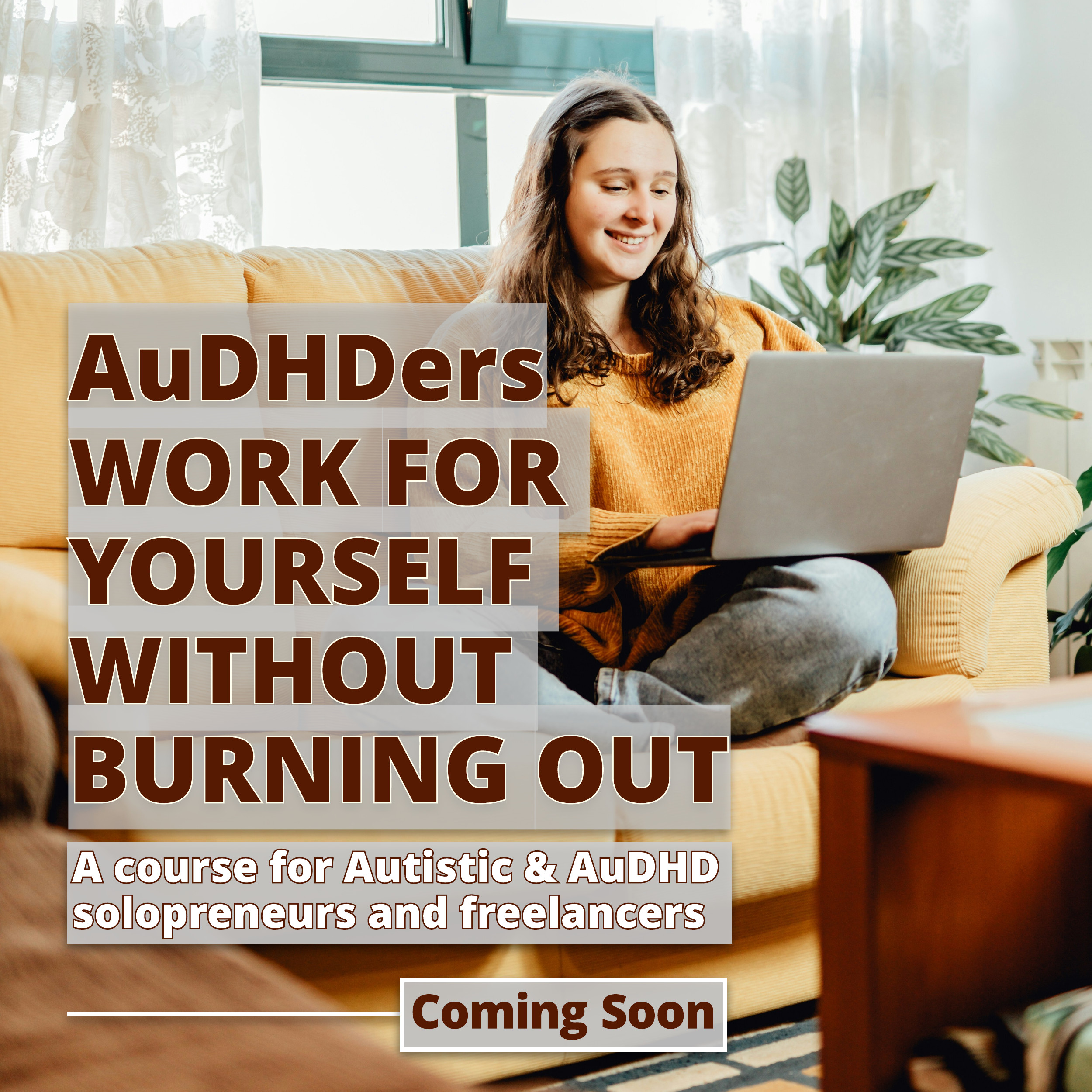
AuDHDers: Work for Yourself Without Burning Out.
A new course from Autism Chrysalis.
Self-employment for Autistic women and gender nonconfoming people shouldn't mean burnout. Learn:
- Executive function hacks
- Marketing without masking
- Pricing without anxiety
- Client boundaries that stick
Build a sustainable solo business that works WITH your brain.
AuDHDers: Work for Yourself Without Burning Out is coming soon!
Sign up here to get info delivered to you when it's ready, and save your future self the executive function load: http://www.autismchrysalis.com/audhd-solopreneur
_______________________________________
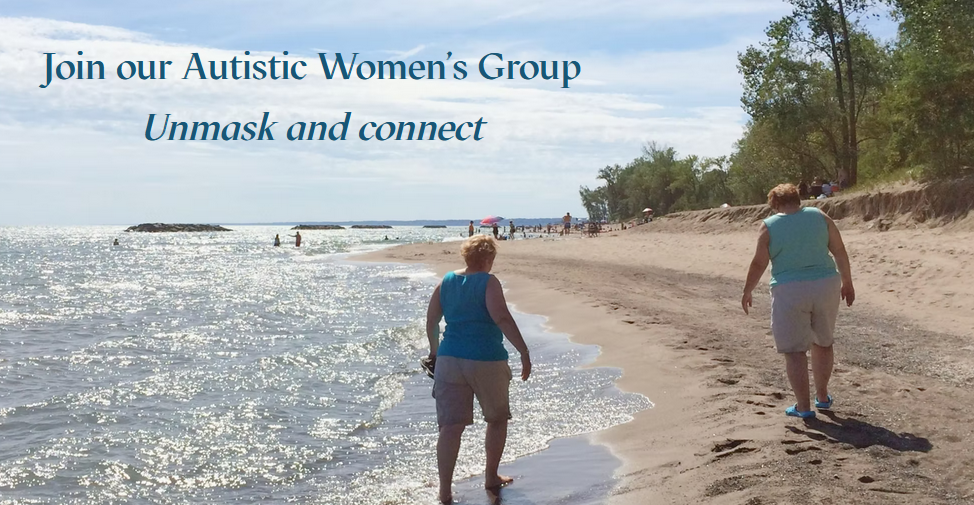
Unmask & Connect
A group for autistic and AuDHD women and gender nonconforming people
You're invited to join Unmask & Connect, a group for autistic and AuDHD women and gender nonconforming people who want a place where they can show up authentically as their true selves and connect with themselves and one another.
You'll be able to:
∞ Learn practical strategies for unmasking
∞ Share experiences without judgment or explanation
∞ Practice unmasking in a safe, supportive environment
∞ Build genuine connections with people you can relate to
Details
👥 Limited to 8 participants
🔒 Cohort-based to build trust and connection
💻 12 sessions via Google Meet
🏳️⚧️ Inclusive: open to cis and trans women; nonbinary, agender, autigender, and gender fluid people
🗓️ Reserve your spot by March 9 by entering your name and email address at www.UnmaskAndConnect.com. Once registration closes, I’ll contact everyone to find a meeting time that works best for the group. If the final schedule doesn't work for you, you’re free to opt out.
Two spaces in this cohort are reserved at no cost for AWG members. The standard cost is $147 for the full 12-week program.
Any questions? Email me at mary@audhdwomen.com or text me at 716-320-0220.
Bathrobe Comics: What's up with all the standing and sitting?
Sarah Jane Cody
https://instagram.com/bathrobe_gal
First published on Jan 21, 2025, on the Bathrobe Gal website
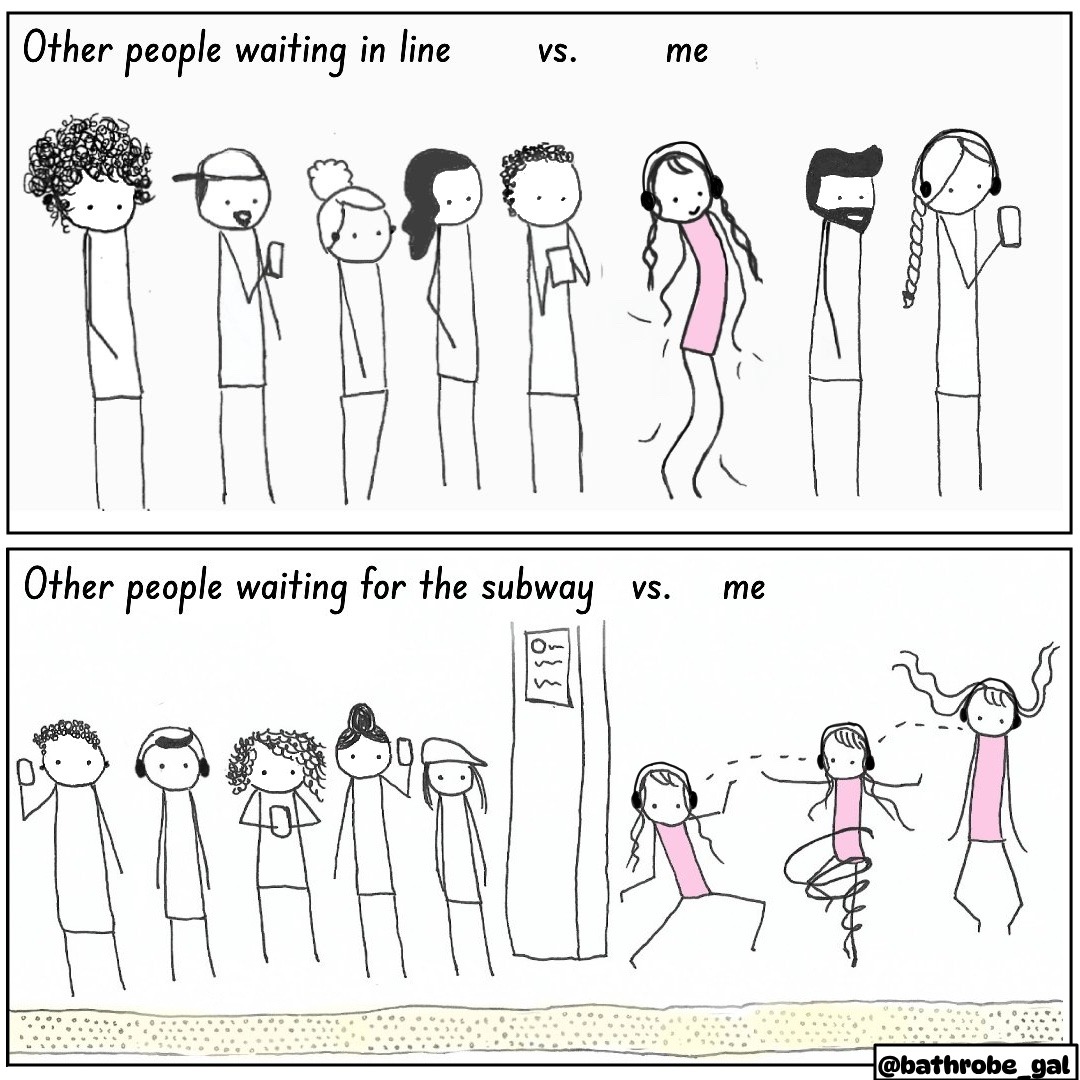
What’s up with all the standing still? (And sitting still and being supposed to be still in general?)
Isn’t that uncomfortable? My body likes to move.
_____
Regarding the subway:
I once lived in NYC. Big cities are overwhelming & intense in so many ways, but one nice thing about living among so many people is that people generally don’t care what you do as long as you don’t bother anyone. This gave me permission to be in my natural state, long before I understood the reason behind my body’s need to move. I spent many hours waiting for trains pacing or dancing around or in patterns following the floor tiles, sometimes humming quietly under my breath, taking care of myself in a way I didn’t understand.
These are behaviors that feel natural to my body but that I used to feel more of a need to try to hide. In the city, where my existence could seem secret even in plain sight, I feel oddly freed at times. Now that I understand myself better, I’m kinder to myself. I am learning to let myself be more free.
Sticker
You Are Okay!
Elissa Fox