

Contents
December 2025 • Vol. 1, Nr. 8
Editorial Dept.
Annie Mydla
Sol Iacob
Cover
Elissa Fox
Annie Mydla
Quotes of the Month
Visual Art
Image of a Staircase by Amira
Autism Chrysalis Life Coaching
Why Finding Your Autistic Community Didn't Fix Your Loneliness (The Truth No One Talks About) by Heather Cook
Why Finding Your Autistic Community Didn't Fix Your Loneliness (The Truth No One Talks About) by Heather Cook
Illustration
Colorful Chaos by Jess T.
Colorful Chaos by Jess T.
Felted Art
The Last Unicorn by Lira Crowley
Essay
Piece of the Puzzle by Emmie
Book Review
"Special Needs" by Lada Vukić by Andrea
Poem
Things My Mother Taught Me by Christina Davidson
Things My Mother Taught Me by Christina Davidson
Sculpture
Surreal Plant by Amira
Surreal Plant by Amira
Comics
Bathrobe Gal: My Two Modes • Sarah Jane Cody
Sticker
About Autistic Women's Group
Established 2021
AWG is an online support group for late-identified autistic women and all other members of marginalized genders. The meeting format is designed to reduce the sensory, social, and executive function burdens that normally come with socializing. Our members are clinically-diagnosed, self-diagnosed, and questioning. AWG is volunteer-led and not associated with any other umbrella organization or company.
Please consider joining us on Zoom. Our member profile is inclusive. Meetings are always free and no registration is required. Members share by speaking or typing. We have many members who come just to listen. You never have to turn on you mic or camera if you don't want to. You don't have to come to every meeting, or stay the whole meeting, in order to be a full member. Disclosure of diagnosis/gender identity is welcome but never required for participation.
Click her to learn more about attending a meeting. You can also...
- See upcoming meeting topics
- Sign up for meeting reminders (scroll the homepage to find the signup form)
- Join the AWG subreddit
I hope you enjoy AWG Shares Magazine. And please do join us in a meeting sometime if you can.
Annie Mydla
Founder and facilitator, AWG
Quotes of the month
Quotes relating to autism and AWG values by autistic and non-autistic people. Have a quote you'd like to share? Send it for inclusion!
“The concept of a “normal brain” or a “normal person” has no more objective scientific validity – and serves no better purpose – than the concept of a “master race.” (...) the most difficult sort of privilege to challenge, occurs when a dominant group is so deeply established as the “normal” or “default” group that it has no specific name, no label.”
- Nick Walker, from his essay, "Throw Away the Master's Tools: Liberating Ourselves from the Pathology Paradigm"
“The best reaction to our mistakes will vary from person to person, and according to his or her age, but please remember: for people with autism, the pain of being unable to do what we’d like to is already hard to live with. Pain arising from other people’s reactions to our mistakes can break our hearts.”
- Naoki Higashida, from his book, Fall Down 7 Times Get Up 8: A Young Man's Voice from the Silence of Autism
Surviving the Holiday Season
Mary Pasciak
https://www.audhdwomen.com/During the holidays, most of us spend way too much time doing things we don't really want to do, and in ways we don't want to do them.
1. Identify your values
2. Connect what you do with what your values are
3. Ask yourself the Magic Question
Three ways to simplify: shortcuts, shrinks, and support
The bottom line
For us autistic women, this can be especially draining. Sensory overload, masking fatigue, and unspoken social expectations can turn what should be joyful into something we just need to survive.
But it doesn't have to be that way.
Here are some steps that can help you have a holiday season that you actually enjoy.
1. Identify your values
When we act in ways that contradict our values – or when we're drowning in details that don't serve them – it drains us faster than almost anything else.
Let's use your core values as the foundation for designing a holiday season that honors who you are.
If you've spent years trying to figure out what you're "supposed" to value, this might feel unfamiliar. That's okay. This is about discovering (or rediscovering) what actually matters to you.
If you already know what your top four or five values are, take a minute to jot them down.
If you aren't sure what they are, or if you want to revisit them, you can use the chart at https://www.audhdwomen.com/holiday-values to help narrow down your top few.
2. Connect what you do with what your values are
Next, make a list of the holiday activities on your plate this year: anything you did for the holidays last year, anything you're planning to do this year, and anything you think other people expect you to do.
Some examples: decorating the Christmas tree; exchanging gifts with your relatives; going to your boss's holiday party; seeing your parents; baking cookies.
Next to each activity, jot down which of your core values are honored by each activity.
Exchanging gifts, for example, might honor your value of generosity. Visiting your parents might honor your value of family.
Also, make a note of which activities are particularly draining due to sensory demands, social masking, or energy depletion. These factors matter, even if an activity technically aligns with your values.
If there are any activities that don't honor any of your core values, ask yourself: Does this reflect what's important to me? Does this belong in a holiday season that honors who I really am?
Give yourself permission to cross those activities off your list this year. If something doesn't serve your values, it's okay to let it go, even if you've always done it before, and even if other people expect it.
3. Ask yourself the Magic Question
Now let's take a look at the activities that remain on your list. They're aligned with your values, but there's a good chance that they're more draining for you than they need to be.
Let's change that.
Here's what I call the Magic Question:
"What would be the simplest way for me to stay true to my commitment to [core value] when I [do this activity] this year?"
This focuses on why the activity matters to you.
And it gives you permission to minimize or eliminate elements that drain you.
For example, let's say you drive three hours each way to spend Christmas Day with your parents. This aligns with your core value of family. But it leaves you exhausted, and you end up needing two days to recover.
The Magic Question would be:
"What would be the simplest way for me to honor my commitment to family when I visit my parents for Christmas this year?"
Now you have options:
- Talk to them on Zoom instead of visiting in person
- Visit them a few days before Christmas, so that you don't have to fight the holiday traffic
- Spend a couple of hours with them instead of the entire day
You're focusing on the reason seeing your parents is important to you and empowering yourself to eliminate or minimize the extraneous stuff that drains you.
None of the alternative approaches diminish the value of family connection. They simply make it more sustainable for you.
Go through your list of holiday activities. For each one, ask yourself the Magic Question.
Here's another example:
What would be the simplest way for me to honor my commitment to generosity when I exchange gifts with my family?
Maybe you could: give gift cards or money instead of spending hours shopping for gifts; draw names so that each one of you has to buy a gift for only one other person; or suggest a dollar limit so that it creates less of a financial strain.
Here's one more example:
What would be the simplest way for me to honor my commitment to celebration when I host a holiday dinner this year?
Maybe you could: use paper plates to reduce cleanup overwhelm; create a quiet room where guests (including you) can take sensory breaks; or clearly communicate your boundaries about arrival/departure times in advance.
See what's happening here? You're focusing on the reason each activity is important to you and eliminating extraneous stuff, which tends to be draining.
Three ways to simplify: shortcuts, shrinks, and support
There are three main ways to simplify:
Shortcuts are about finding easier ways to do the same thing. Like using instant mashed potatoes instead of making them from scratch. Or ordering a grocery store pie instead of baking one. Or buying gift cards instead of hunting for the "perfect" present. The shortcut doesn't diminish the value you're honoring. It just removes unnecessary complexity. Shortcuts aren't "cheating" or being "lazy." They're about conserving your energy for what actually matters.
Shrinks are about doing less of something. Spending two hours at the family gathering instead of eight. Inviting three people instead of fifteen. Buying gifts for your immediate family instead of your entire extended family tree. You're still honoring your values. You're just doing it at a scale that doesn't destroy you. Neurotypical people might not understand why you're doing less, and that's okay. You don't owe anyone an explanation for protecting your energy.
Support is about getting help. Asking someone to bring a dish instead of cooking everything yourself. Splitting the driving with a family member. Having a friend come to the party with you so you're not navigating it alone.
Many of us were taught that asking for help is weak or burdensome. It's not. It's strategic and necessary.
You don't get extra credit for suffering. Support isn't cheating.
The bottom line
You don't have to do the holidays the way everyone else does them. You don't have to perform neurotypical holiday expectations. You don't have to exhaust yourself to prove you care.
You just have to figure out what actually matters to you, and then find the simplest way to honor that.
The holidays can be different this year. They can be yours.
Want to put these strategies into action?
Download the free Neurodivergent Holiday Survival Guide workbook at www.AuDHDWomen.com/holidays The workbook includes:
- Empowering rules to replace internalized rules that are holding you back
- Values identification worksheet
- Holiday activity audit template
- Magic Question prompts for common holiday scenarios
- Scripts for setting boundaries with family and friends
This season, give yourself permission to celebrate in ways that honor who you really are.
Visual Art: Image of a Staircase
Amira
Artist's statement: I made this in a Photoshop class. It's a combination of two images: the first was a historic photo of an outdoor staircase in Scotland, and the second was a photo of a more modern indoor staircase with the quote painted on the steps.

Why Finding Your Autistic Community Didn't Fix Your Loneliness (The Truth No One Talks About)
Heather Cook, Autism Chrysalis Life Coaching
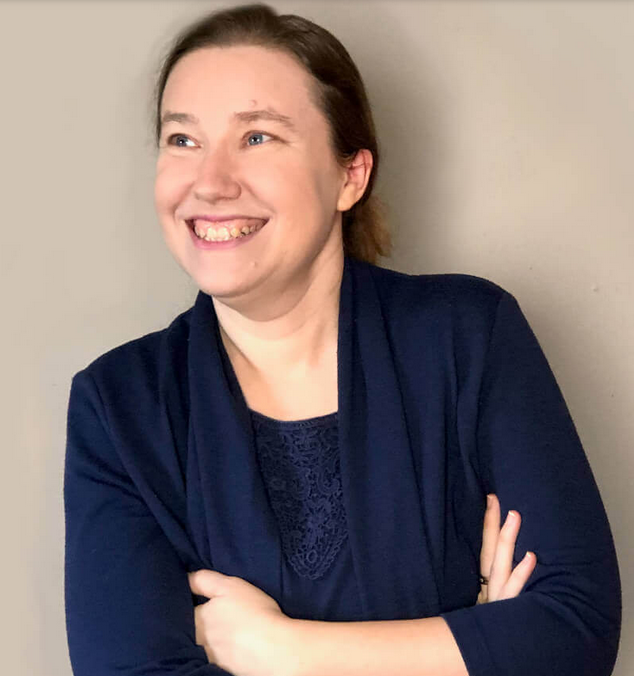
So many of us spent our entire lives being misunderstood, and when we finally figure out that we’re Autistic, that we’re not broken and we just communicate differently, we think finding community in other Autistics will be what allows us to finally find good relationships. But sometimes, it just results in us feeling more isolated than ever. Here’s my thoughts on why this happens.
You can read a full transcript of the video on the Autism Chrysalis website.
Visit Autism Chrysalis and follow Heather on social media:
Website: www.autismchrysalis.com
YouTube: https://www.youtube.com/@autismchrysalis
X/Twitter: https://twitter.com/hmm_cook
Mastodon: https://universeodon.com/@hmm_cook
Instagram: https://www.instagram.com/autism_chrysalis
BlueSky: https://bsky.app/profile/autismchrysalis.bsky.social
YouTube: https://www.youtube.com/@autismchrysalis
X/Twitter: https://twitter.com/hmm_cook
Mastodon: https://universeodon.com/@hmm_cook
Instagram: https://www.instagram.com/autism_chrysalis
BlueSky: https://bsky.app/profile/autismchrysalis.bsky.social

Illustration: Colorful Chaos
Jess T
Artist's statement: I've always been fascinated by drawing eyes and faces. And the doctor who diagnosed me with ASD said that this was another form of "stimming". I started drawing eyes as a child, and it took over 35 years for me to understand why I did... because eye contact always felt so personal, so deep, and depending on the person, downright painful. I never had the words, so I did what I always did: I created to survive and to process the things I didn't understand.
Essay: On Jealousy
Victoria
I am jealous.
It is difficult for me to write down this sentence, being honest with myself about it. I don´t want to be jealous. Jealousy is bad, it’s a sign of insecurity, it’s egoistical, it’s infantile. I even once read somewhere that autistic people allegedly can´t be jealous. Well, that might be true for some but certainly not for me.
I feel the need to write about this topic because of a recent experience I have had with an NT friend of mine.
We have been friends for approximately half a year and bonded over the fact that we were still dealing with the end of our most recent relationships. We shared our experiences with dating in the past, with our previous relationships and our hopes for the future. And we agreed that it was good for us to stay single for a while, at least until we have fully processed the past.
Last week I visited him and with the biggest smile on my face he told me that he fell in love. It had been 8 months since his last “crush” ended and now he feels ready to commit again. Three few months ago, he met a woman on a dating app, they started dating and now they have made their relationship official. I encouraged him to tell me more about her. I smiled at him; told him I was happy for them. But in my head, there was just this loud voice yelling: “Are you freaking kidding me? You are in love AGAIN? After NINE months???”
I went to the bathroom in his apartment and on the table next to the toilet was a new basket full of woman´s shampoo and conditioner bottles. In front of those bottles stood a framed piece of paper. It was a handwritten note asking: “Will you be my girlfriend?” with 3 rectangular boxes next to the word “Yes”, “No” and “Maybe” with a red cross inside the box next to “Yes”. I think I made an audible puking sound when I read that. I went back to the living room and the conversation just got worse. The woman he is dating sounds lovely. In fact, all of his previous relationships sound lovely. There were no issues with abuse, cheating or violence. They broke up because they grew apart emotionally, because they lived too far apart, because it just didn't work out. After all of these relationships ended it took him three months at best to meet someone new with whom he had great chemistry and fell in love.
When I drove home from this meeting the image of the bathroom note just kept popping up in my head. And for the rest of the week, I just couldn’t get over it. I even started imagining how it all played out. How he probably lighted candles in his apparent, put-on nice clothes, used his best cologne, invited her over, cooked her a nice dinner and then gave her the note asking her to be his girlfriend. I imagine how she smiled at him, hugged him, kissed him and said yes. How cute, how romantic, how lovely. It makes me want to pull my hair out.
No man has ever done something like that for me, has put in that much effort. I have never had such a healthy and loving romantic relationship.
And I had a realization. The situation reminded me of my experiences with another NT friend of mine. We started becoming friends in high school, though lately we are not as close as we used to be. I have always envied her. She is incredibly smart, kind, disciplined and talented. After we finished school, we both started studying and our college experiences differed immensely.
On the first day of class, she immediately made friends. She got along great with her flat mates. She had a side job, joined a sports club, did voluntary work. She enjoyed partying, studying a semester abroad, traveling to different cities and countries. And she was never without a boyfriend. Every time a relationship of hers ended, it took two months at best and the next one came along. Fun fact: last year almost the same situation played out with her. We had a long conversation, where she told me how much she enjoys being single, how she just wants to live her life without commitment for now and so on. One months later she had a new boyfriend and now she has moved in together with him.
My experience with early adulthood was different. I had a hard time in college fitting in and making friends. I could not work or exercise regularly because my life with autism is so draining. I couldn't go to clubs or parties, because they are too loud and crowded. Traveling is difficult, because it is unpredictable. I had a boyfriend but our relationship was incredibly difficult and toxic. I tried dating again, but I have yet to meet a man who truly gets along with my unmasked personality. I often felt and still feel lonely.
Both of these NT friends trigger these feelings of jealousy in me. It just feels unfair, how easy it is for them to make meaningful and healthy connections. To hold down a job, to exercise, to go after their dreams, while I am being held back by my disability.
Before I knew I was autistic, these situations were even more hurtful because all I could do was blame myself. I kept wondering, looking desperately for a reason, an explanation that would finally reveal why I could not make friends easily. Why theses normal things were difficult and tiring. What was wrong with me? It was so confusing, because deep down I genuinely liked myself. I loved my intellect, my curiosity, my ability to view things from different perspectives, my intense empathy and urge for fairness. I have so many great things to contribute to this world and other people´s lives. Why didn't anyone see that?
For a long time, I thought I would just have to try harder, to put myself out there again, to exercise more, to work more. I felt like I had to prove myself and others that I could live a “normal” life, just like everyone else. But instead of getting better, I only fell further into depression and felt more worn out and depleted than ever. I wondered how someone so faulty and weak like me could ever make in in this world. What was the point of trying anymore, if every day was a fight, that I couldn't seem to win?
Learning about autism has saved my life. I was looking at it from the wrong perspective. My instincts were right all along. I was never weak. Me not giving up on bettering my life, doing endless research to find a solution for my problems and still seeing the good sides of me are signs of my strength and endurance. Now I realize that I spent most of my college years being completely burned out, going against my needs, stepping across my own boundaries repeatedly, trying to be someone I was not. But I should never have been measured by standards that aren’t made for me. It reminded me of a quote by Albert Einstein: “If you judge a fish by its ability to climb a tree, it will live its whole life believing that it is stupid.” I spend my life thinking I was a squirrel, but it turns out I am a fish desperately doing its best to live in a forest. So, my objective should not be to climb more, but to get back into the pond as often as possible. To monitor my energy levels, to surround myself with other sea creatures and most importantly to be compassionate with myself. Now I celebrate every failed tree climb and every refused climb. Because they are signs of me standing up for myself — of me not trying to be someone else, but giving myself room to be me.
No matter what I do, I will always be a fish and I will always struggle living in the forest. That was difficult to accept at first and on some days it still is. It´s just not fair. And sometimes I am jealous of people who don´t have to deal with these challenges.
However, when I think about it, I for sure have caused jealousy in other people. Isn’t my whole life unfair? I was lucky enough to be born into a stable, loving family and a modern and wealthy country. I have never suffered hunger or thirst; I have a robust physical health and access to advanced and affordable health care. I was able to get a good education, to choose a career path based on what I wanted to do. How many people in the history of mankind have been so lucky?
Even my friends, who grew up in similar circumstances have surely been jealous of me. Jealous of my drive to learn and ability to do it fast and seemingly without effort. Jealous of my unshakeable self-esteem and ability to go against societies given rules. Jealous of my bravery to try new things and continuously putting myself and enduring challenging situations. Jealous of my ability to reflect myself and find my own solutions.
And if they opened up to me, would I make them feel wrong for how they feel? Absolutely not. I would be surprised to hear it, since I am so used to seeing my weaknesses that I forget about my strengths. I would tell them about the things I envy and cherish about them, how amazing and talented they are from my point of view. I am thankful for both of these friendships, even though they occasionally remind me of a life I will never have. Yet at the same time they are a reminder that some people do see the great things that I have to contribute to the world. That I can build meaningful connections, and that I am not as alone as I sometimes feel. That my life is filled with things worth being grateful for.
Jealousy is frowned upon, because it can cause people to lash out against people who have what they feel entitled to have. It can cause them to become bitter, hateful, full of spite, blaming the world. But I don´t want to be that person. I don´t want to hurt anyone. I want my friends to feel comfortable sharing their happiness. I want them to feel accepted and loved. It is not their happiness which is causing my jealousy but rather my own unhappiness. And it is valid to be unhappy about being disabled. Though I will keep working on it. By valuing these friendships and reminding myself of all the things that make my life worth living. By cherishing every happy moment and being compassionate with myself and others. And most importantly by allowing myself to feel jealous. I will keep screaming loudly in my car, when those memories and feelings of unfairness come up. I will go outside, put on my headphones listening to loud music and walk energetically through my neighborhood making an angry face. I will keep making the puke sound, when I think of the bathroom note. Because I know with a bit more time those impulses will be overtaken by a feeling of joy and appreciation for my friend´s happiness.
I am still jealous.
And I will be for some time. But jealousy by itself does not make me infantile, egoistical, bad or insecure. It is just a feeling. A feeling that makes me human. And I am letting myself feel this, in all its ugliness and unfairness. Because taking a step back and reflecting on it makes me cherish all that I love.
Felted Art: The Last Unicorn

Essay: Piece of the Puzzle
Emmie
I feel so very terribly out of place. Its as if suddenly I realized I wasn’t meant to be in the puzzle after all, and that my piece, that I’d been so desperately trying to fit in somewhere, was now revealed to forever sit alone.
And you know what really sucks, that my favorite thing in the world, my lovely cat named peanut has to eat prescription food, and it is a stark reminder that her life will most likely end before mine, and I will be alone again. The thing that understands me most, will be gone and I will have to start over.
So yes, the puzzle piece that is me feels lost.
Like someone found it in a dusty corner of a room or perhaps tucked under a couch, and without care or intention, tossed it into a random box with other puzzle pieces. Maybe it’ll be fine, perhaps they thought, maybe no one will ever notice there’s one extra piece that doesn’t fit, and it will be left up to someone one day to put the puzzle together and realize that some thing or rather someone is out of place.
It feels like a cruel joke, and maybe that I’m the only one who figured it out. I think I’ve known for a minute, in the back of my mind, recognizing slowly as the other pieces were lovingly sorted and organized into piles, and yet, when picking me up, they were only confused, and sat me back down on the table by myself.
I think maybe I thought if I could surround myself with similarly colored pieces I could blend in, and maybe they would never finish the puzzle and I could relax. Instead it feels as though I’m slowly watching a clock tick down until everyone realizes just how much I don’t fit. It feels a little like the world is unraveling, and I’m trying as hard as I can to tie it back together.
Recognizing you’re different can feel like quarantining. Destined to sit alone in your own world, unable to interact with others fully because you could cause harm to them or inconvenience them with an illness.
Suddenly I feel more alone, and I’m not sure when I noticed how different I truly was, only that it made me want to squirrel away even more. I’m Sure there are others like me, but when I don’t know them it feels harder to believe they’re out there. So yes, right now I’m sad
Book Review: "Special Needs" by Lada Vukić
"Special Needs" has been quite a special book for me.
I have never read a piece of literature that conveys so well the perspective of an autistic child. Contrary to third-person, cold clinical reports, this account of autism is written in first person, from the point of view of Emil, a 10-year-old boy that lives with his hard-working single mother.

The most important thing of this book, for me, is not the plot. Sure, things happen, ordinary life, evolving relationships, important events. But the book is not really about the plot. It addresses social issues like the struggle of a working class single mother, but it's not about social themes either.
In my view, the main topic of this book is "the mismatch" - the constant mismatch that Emil experiences between his and others' perception of himself and the world. In other words, the point of the book is Emil's worldview.
The author really stepped in his shoes - the "special" orthopaedic shoes Emil has to wear, and that he hates with a passion- to express with grace the position of a child that knows and is relentlessly reminded that he is different.
He misunderstands and is misunderstood, he sometimes cannot talk, and sometimes chooses not to because he knows that people around him won't have the patience to understand where his words are coming from. Some people value his abilities and have a positive and inclusive approach to him, and it makes an enormous difference in his life.
Emil loves snowflakes and butterflies, watching movies and spending time with his mum. He hates his shoes and math, and he has a supernatural hearing.
Special Needs is not a heavy book, it feels ordinary, like peeking into Emil's life and an inner dialogue where whales, for one, are a recurring theme. Yet, heartbreaking realities are also told through the lens of how Emil interprets them, and how his world is rocked by the events. Ultimately, what this book tells us is that everything that an autistic child does or says, has a logic, a meaning, a message, if one is able to listen. And when one is not, silence sometimes is a message too.
I appreciated the psychological subtlety that the author achieved in portraying things like "literal thinking", logical and associative processes, a bottom-up perception, or the relationship to the inanimate world. None of these things are ever named, and neither is autism, they just exist in the fabric of Emil's perception of reality.
When Emil can't talk, he is still saying things, "only to himself". When he does talk, he is often met with surprise by the adults around him - "where is this coming from now?" - or worse, with scolding. He finds comfort in his mother's care, but ultimately, no one fully understands his inner world and where 'he is coming from'.
Ultimately, the predominant, unnamed experience of Emil is confusion - why did X thing happen? What did a person mean by that strange thing they said? Why did they promise something and then forgot about it? Why did they get angry, or laugh? And so on and so forth. I found the book brilliant in conveying this perspective while still balancing it well with the "other side" - the big wide world and its rules. It is the first novel of its author, Croatian writer Lada Vukić.
I still personally found that the book would have had margins of improvement, both from a literary point of view, and in terms of the breadth and accuracy of how autism is represented (e.g. sensory issues, meltdowns, etc). Nonetheless, I loved it and it seems to me that it's a gem in the current landscape of cultural representations of autism. Emil's experience of autism is extremely different from mine, yet I still found myself relating to many aspects of it.
I don't really have a point of comparison to other similar books either, because it's the first book of this kind that I have ever read or found. I do hope to see more of this in the future.
Poem: Things My Mother Taught Me
Christina Donaldson
I wrote this poem in 2017. This is a piece of fiction, written about a character who had this experience. For me, this also represents my ideal mother/inner mother.
My mother taught me everything she knew in the first five years of my life, or that is what she said.
She showed me how to undress like a goddess, with fingers lightly touching each garment as it was laid to rest for the day. Her every motion done with diligent care, part of the whole of her dance.
She showed me how to be in nature; still as the grass, silent as the ladybug. We would lay in the sun, watching as the clouds passed above us in the great expanse of sky. She showed me how to be one with this vastness, to join in its mystery, chaos and simple beauty.
She showed me how to pace myself not according to the day, but to each whole and separate moment. And in doing so, if the world wasn’t forgiving, she would be.
She showed me how to drink a cup of hot tea, with the utmost of dignity and elegance, ending each sip with a long, deep sigh. Her eyes lightly shut, a contented smile on her face.
My mother taught me how to approach each new love. Slowly, softly, with zest and passion following closely behind.
She taught me how to pull poetry from my heart, writing to the silence of an empty kitchen at night. This, my true and only waking hour.
My mother taught me to see the kindnesses of the world, and to share them with even the smallest among us.
She taught me how to close my eyes and see the world through my own free imagination. Lazing on hot sunny days, we’d thrill each other with stories of our own making, some from within, some from the beyond. My mother taught me how to say good night as if the whole world were falling asleep at the same time and tomorrow held the greatest unknown.
My mother taught me how to unravel a knotted ball of yarn. With determined fingers, who endure until they reach closure, whatever that may look like.
My mother taught me how to say goodbye to the perennials out front, taking their leave for what would always seem too long. But she knew better, and would share their secret with me; beauty rest.
My mother taught me how to whisper the truths of my soul to myself at night, while laying in the dark, and to trust that I was heard.
She taught me that her love for me was as endless and unrelenting as the hum of our refrigerator, and that even after it was long gone, that hum would stay with me.
To put it simply, my mother is magical.
Humor: Small-town boy traumatized by manic pixie girl disappointment
A boy has reportedly experienced "the biggest disappointment of his life" after discovering that his date was not a mysterious bohemian creature but a normal person with weird habits and a mind of their own. Jose, 25, in search of a relationship that could lift him out of the boredom of everyday life, has been found on a bench, holding his head in his hands in a posture of utter desperation.
"I am devastated", he said – "we went out three times. One for ice cream, one for a walk, and the third...was the last one. I had never met anyone like her. I never had such an immediate, life-encompassing, sublime connection with any other girl before. The first time I saw her, she was sitting in a bench with her feet up, because she is unconventional and care-free like that, journaling while autumn leaves fell around her blue hair. She immediately captured my attention. Something different about her. She stood out. My lunch break was too ordinary and boring compared with her mysterious, artistic presence. She was just magical. Almost like she wasn't even a person, but some ethereal creature fallen from the trees. I approached her, we chatted for a bit. I asked her what she was writing, she said "vegan recipes". It started raining a bit and she said 'it's fine, I love walking under the rain sometimes.' Wow. 'This girl is something else', I thought. She clearly liked me too as she immediately agreed to meet again with the excuse of discussing books together. Then she left. I sat there wondering, could she be the sparkle I missed in my life? I never dated a girl with blue hair. She seemed so nonconformist. I loved it. I was so immediately inspired that I threw the rest of my sandwich to the pigeons and decided to become vegan on the spot. The day after I started reading Kant. She just brought out the best of me like that."
Jose pauses his narration to take a deep, nostalgic breath, his eyes staring at an invisible point on the horizon. "Yeah, I really can't believe what I've lost", he continues, "She understood me and listened to me like no other. On our first date, we spoke for 4 hours. I told her all my deepest insecurities, life ambitions, family issues, everything. It felt like unloading a massive truck. I told her things I had never told anyone before – like the fact that I wanted to be a poet when I was younger, or that I am so insecure about my hair. I talked and talked and talked, for 4 hours, and she never once interrupted me. She held it all for me. She is such a good listener. No therapist had ever done that for me. At the end, I stopped my river of words. That's when she looked at me with a straight face and said: 'I thought we would discuss books today.' Can you believe that? I laughed so much. She kept the straight face, to make the joke even funnier. She had such a great irreverent sense of humour."
"Life with her was so exciting. It was a surprise after another. When we went for a walk, she saw a tattoo shop and screamed "oh we should get a tattoo!!" I never got a tattoo before, but her childlike excitement made me feel so protective of her in that moment. 'I would do anything to make her happy', I thought. She dragged me in. I got a tattoo of John Lennon. She made me feel alive. 'I can buy you an ice cream', I said when we got out. 'I'm no longer vegan', she replied, as if she just remembered something important – 'I have started eating a lot of nuts. Nuts are great, walnuts especially. Squirrels get 70% of their nutrition from nuts. Oh damn sorry but I am feeling quite anxious. Let's go home.' Pure chaos, isn't it? She was so unpredictable. I saw in her everything that I needed: adventure, free therapy, beauty. She was a new chapter of myself. The key for a whole new life. She was all that I needed her to be. I felt like I was in 'Eternal Sunshine of a Spotless Mind' - the beginning I mean, not the unhappy ending." Jose smiles affectionately, as he remembers all the hopes of those magical times. Then his face turns dark. "Well...not yet. But that came soon after."
"The third date was when the disaster hit. I don't know what happened. First of all, she was late. Once she finally arrived, we started talking about politics, and that's when it happened. She disagreed with me. I was stunned. Wow. That was really unexpected. She also said that she didn't like jazz, and that she would never marry anyone. I couldn't believe it. She said weird things, like that she likes to hug trees and she never wears socks inside shoes. She said her shoes stank because of this sometimes, because she only does laundry every two months. She took her shoes off to show me! She kept eating nuts while we were talking. I couldn't believe that the same magical creature I had met under those autumn trees was this nut-eating gremlin with stinky feet in front of me. She was like a whole different person."
Jose sighs. "After that, I didn’t contact her anymore. She only wrote to me once - well, she shared a video about squirrels. I am in therapy to recover from all this. The trickiest thing is that she was the best therapist I ever had. I feel like calling her to tell her about herself, really. I know she would listen. How funny. I'm still vegan though, so there's that."

Sculpture: Surreal Plant
Amira
Artist's statement: I made this piece out of a broken metal Halloween decoration sculpture, items found in nature, dollar store supplies, lots of fake moss and tiny Lego frogs, and an obscene amount of glue.
Bathrobe Comics: My Two Modes
Sarah Jane Cody
First published on Jan 13, 2025, on the Bathrobe Gal website
Alas, I can’t wear my bathrobe in public. But there are different kinds of armor.
(Yes, those are my gold Loops and sparkly slap bracelets.)

Sticker: Be Here Now
Elissa Fox
