April 2026
Contents
April 2026 • Vol. 2, Nr. 4
Editorial Dept.
Annie Mydla
Sol Iacob
Cover
Elissa Fox
Annie Mydla
By Annie Mydla
Love Letter
Love Letter 25: Exile, Despair, Love
Love Letter 25: Exile, Despair, Love
by Stacey Plate
AuDHD Alchemy: Work for Yourself Without Burning Out by Autism Chrysalis
Unmask and Connect by Mary Pasciak
Comics
by Sarah Jane Cody
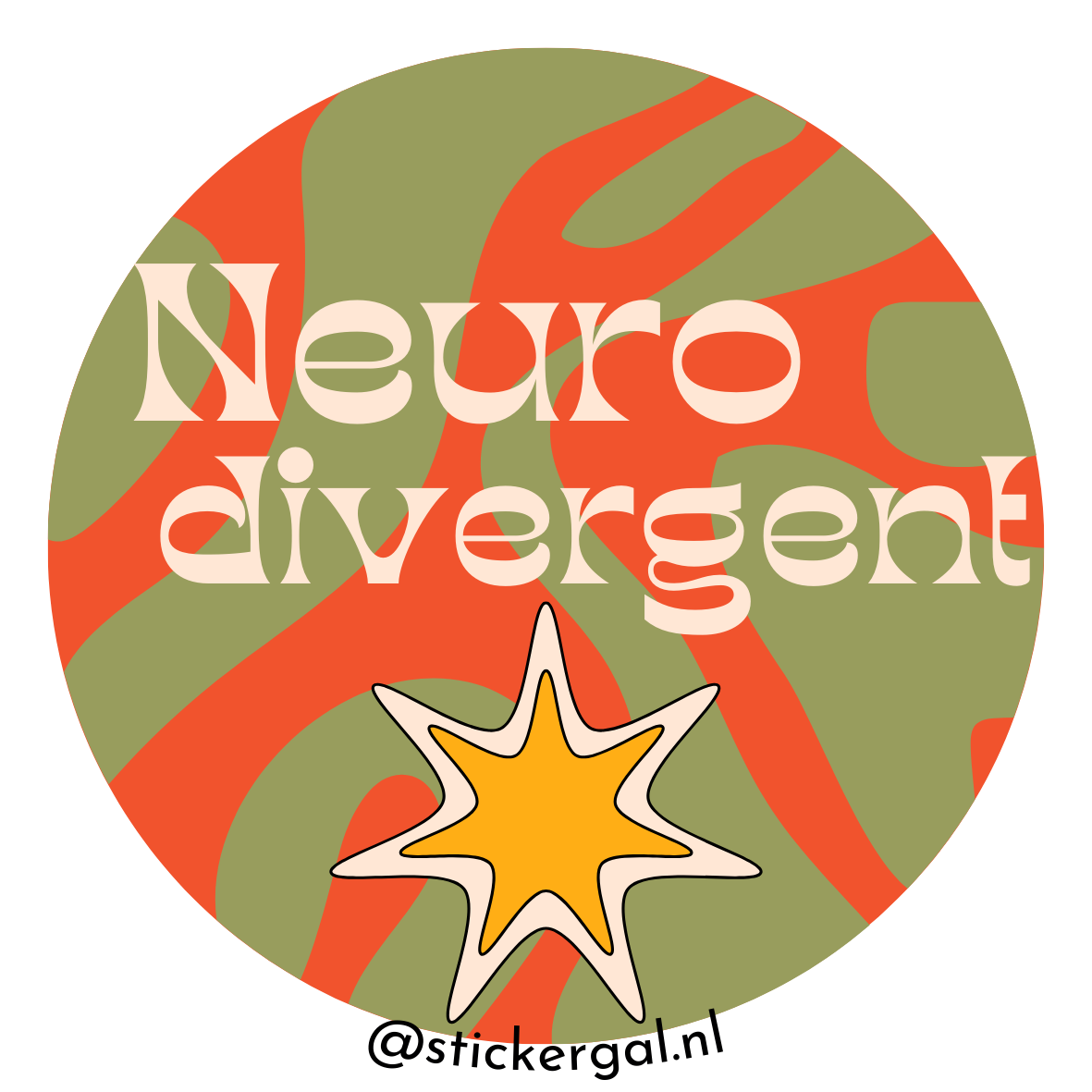
Sticker
by Elissa Fox
About Autistic Women's Group
Established 2021
AWG is an online support group for late-identified autistic women and all other members of marginalized genders.
The meeting format is designed to reduce the sensory, social, and executive function burdens that normally come with socializing. Our members are clinically-diagnosed, self-diagnosed, and questioning. AWG is volunteer-led and not associated with any other umbrella organization or company.
Please consider joining us on Zoom. Our member profile is inclusive. Meetings are always free and no registration is required. Members share by speaking or typing. We have many members who come just to listen. You never have to turn on you mic or camera if you don't want to. You don't have to come to every meeting, or stay the whole meeting, in order to be a full member. Disclosure of diagnosis/gender identity is welcome but never required for participation.
Click her to learn more about attending a meeting. You can also...
- See upcoming meeting topics
- Sign up for meeting reminders (scroll the homepage to find the signup form)
- Join the AWG subreddit for weekly meeting reminders
- Join our sibling meetings: the AWG Self-Esteem Group, Book Club and Connecting Hour, and Discord server
I hope you enjoy AWG Shares Magazine. And please do join us in a meeting sometime if you can.
Annie Mydla
Founder and facilitator, AWG
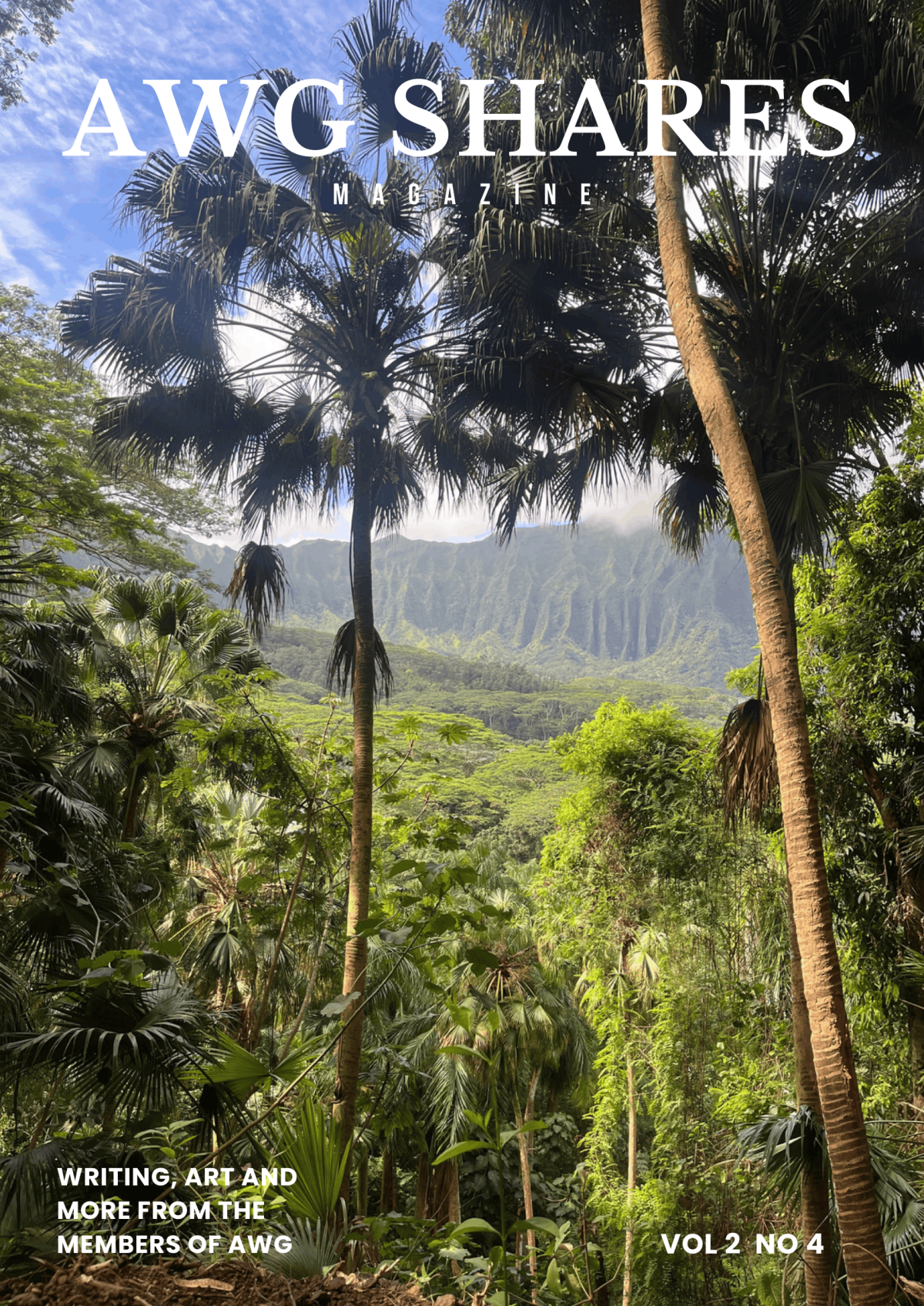
About the cover
April's cover is called Beauty and Wonder on O'ahu and was designed by Elissa Fox.
We are always in need of covers! Submit a cover, or an image that you would like to see on a cover, at https://autisticwomensgroup.com/submit
Love Letter
Love Letter 25: Exile, Despair, Love
Stacey Plate
Listen to an audio recording of the letter and purchase the digital booklet, With Love, You, at https://www.staceyplate.com/with-love-you
Darling [Recipient’s Name],
You are loved far out beyond what you can think and feel. It will surprise you in the wildest, most wondrous places.
That part of you who others will surely look down on for how unskillful, unenlightened, and much further behind she is. The part who has too big feelings far too frequently. The messiest, ugliest, and meanest parts. The ones with so many desperate needs. The part who says, “No.” The one who asks for exactly what she wants and doesn’t feel ashamed. The part of you perpetually afraid she’s not enough of what They want.
Wherever the hurt is most exquisitely tender. Where the tears threaten to never stop. Where it feels like agony. Out where you wail, and out past that where you rage.
Into those tight, cramped, craggy, darkest spaces where your aloneness resides alongside your misfits, clowns, outcasts, exiles and whores. Into that spot in your heart where the pain stops you breathing. Where sadness feels a lot like dying and where, for a flash, you sometimes stop wanting to live. Into the places air can barely get. This is where my love will find you.
This is where it has always been waiting.
You don’t have to earn it. You don’t have to come looking for it. It is effortless and free. My love is coming for you everywhere you are. It will find you no matter what, and you can’t ever lose it. I will just keep giving it to you.
There is so much love for you out here. It is everywhere, in everything. There is so much love for
you in there. It is everywhere, in everything. I keep pouring it in.
You are Beloved. Not sometimes. Not some parts. The whole, grand, marvelous universe of you. You. Are. Beloved.
I am here, wiping the tear from your cheek. Softly, holding your gaze. Cupping your face in the palm of my hand. I am here, pouring all of my love into you, and I will never stop. My love for you only grows.
My heart,
[Recipient’s Name]
Essay
Happy 1 Year of AWG Shares and 5 Years of AWG!
April is the month of anniversaries:
5 years since AWG was founded
3 years since I hit my burnout
2 years since I joined AWG
1 year of AWG Shares magazine
It's true that time flies. It feels like yesterday that AWG Shares started, or that I joined the group. Yet, so much has changed, and I cannot thank AWG enough.
It found me in the worst possible shape, and it created the stepping stones for me to walk into a new, post- identification life.
When I discovered I was autistic and I hit my extreme burnout, my life suddenly regressed to what I can only imagine the universe post Big-Bang to be like: shapeless, chaotic, raw, ruthless. It sounds dramatic, but autistic burnout is not a joke. After many years spent exhausted and on the brink, my entire world had finally collapsed, the person that had brought me there (myself) went in smoke, and now there was no up and down anymore, just these unknown, giant materials of my new life, randomly clashing, coalescing, reacting to each other with speed and temperatures far beyond my scope, while my brain forced me to stay in bed. In a few months, I lost my job and ability to work, relationships, opportunities, I lost a lot of mental and physical function, and almost lost my visa. I was almost a casualty in the graceless, all-encompassing process of creating a new ground to walk on.
So, difficult times. From the outside, this looked like me being very exhausted and very quiet. But I was mostly quiet because burnout had compromised my ability to access language. It is a privilege to be able to write this now, but it would have been completely unthinkable at the time. My very little energy went into surviving and dealing with the medical system.
AWG found me in that kind of raw shape, feeling fatally fallen behind, and it instantly became one of my few constants in the chaos. Anything could happen, but on Tuesday afternoon, at 5pm (UK time), on planet Earth I could join a zoom link where everything went on exactly as planned, and I was surrounded by people with relatable experiences. It welcomed my quietness, too. No questions asked. That made a difference.
In the extreme isolation that I had unwillingly found myself in, it became a connection to the world. Low-demand, but solid. Over time, in the long process of overcoming burnout, AWG became a double source of growth, both with groups and with volunteering. I am happy to say that I am no longer in burnout now, and I also owe it to this place.
I found in AWG a group of great people who like to uplift each other, and a space where the fabric of our experience (autistic women and people of marginalized genders) can be woven together, where it can be celebrated and indulged in its details, and it can find its way back from silence to the daylight.
AWG Shares has been an amazing space for such reclaiming - of language, sound, visual art, and more. I love being part of the magazine and I get surprised and intrigued every month by the fantastic stuff that my fellow contributors come up with.
I know others share my feeling of AWG as a little oasis where you can go to get restored. It doesn't ask you to be anything else than what you are. It values everyone equally, whether they speak or not, whether they work or not, they have social connections or not, and whatever their background. I know, I am really singing the praise. But things worth singing the praise of are so rare to find, so let me indulge in it, and it's AWG's birthday after all! And their child's (AWG Shares) birthday!
AWG groups also happen in a format that works for an autistic brain. This is key. The format just fits, like a perfect shoe on your foot. I think that's a big part of why many find it so helpful and relaxing to be there.
It is a space of witnessing, creation, but most of all, just simple presence. I watched it grow as it watched me grow. I have been given a new succulent a few days ago – a very prolific one, it makes pups all the time (it's the dark green one with white dots and tentacle-shaped leaves, if you know your succulents). AWG has been the same. It has been making pups. Affiliated AWG groups have sprouted like mushrooms – book club, connecting hour, Discord, AWG Shares magazine...and I am sure many more to come.
While AWG's founder, Annie Mydla, has done an amazing job with creating and curating this space, this is a collective space and a beautiful collective model for something that works for autistic people. My hope and wish is that this model will multiply into a lot of different pups - maybe across the world, why not.
Happy 5 years AWG and happy 1 year AWG Shares :)
Essay
Spiraling the Spectrum: Navigating AuDHD as a Woman.
“I let myself off the hook.”
- A woman with ADHD describing her relief after receiving a late diagnosis
Pre-Diagnosis: Autism
Until a few months before I was diagnosed with both in October 2025, I didn’t realize it was possible to have both ADHD and autism, nor that the term “AuDHD” had been coined to describe the intersections and unique features of both conditions.
From my limited knowledge, I had always imagined them as stark opposites, as strangers rather than cousins.
My therapist and I began discussing the possibility of autism several years ago following conversations about how I felt profoundly different from my peers. Most of our discussions focused on social and emotional difficulties—trouble making eye contact and knowing when to enter conversations; dread and exhaustion surrounding forced social interactions; overstimulation from physical touch; emotional overwhelm; and excessive anxiety around disruptions in routine. We also talked about my intense interests and relying on social scripts and mimicry to “appear normal.”
For a long time, I thought maybe I had social anxiety, but hearing people with social anxiety articulate their experiences never fully resonated, nor did my childhood teachers and coworkers calling me “shy” and “quiet.” People I was more comfortable around, like friends or other students, would say the opposite, even remarking that I would be good at stand-up comedy, or assuming I was an extrovert. I also used to wonder if I had misophonia—while working for hours in a busy, loud coffee shop is no problem for me, I am hypersensitive to other noises, like hearing people walk back and forth across a hallway. Misophonia didn’t fit, either; nor did Borderline Personality Disorder (a common misdiagnosis for autistic women).
For someone without autism, ordering a beer at a brewery is probably a breezy experience. For me, knowing what to say and when to say it, and making sustained eye contact for those brief moments, is like passing a test. I’ve long carried acute shame and embarrassment around this. How do other people simply know what to say and when, how to establish close relationships, how to deal with changes in their routines, and just exist? It’s as if everyone else received a guidebook for being a person, but the guidebook somehow skipped me.
Pre-Diagnosis: ADHD
A few months before I began planning to seek out an autism evaluation, I came across the r/AuDHDWomen forum on Reddit, where someone had posted a graphic depicting what it was like to be autistic and have ADHD.
I was startled by how much I saw myself in the ADHD portion. Impulsivity, distorted spatial awareness, craving novel experiences, issues with memory and concentration, procrastination, chronic overwhelm, obsessive perfectionism, etc…I’ve dealt with all of these for as long as I can remember.
Prolonged concentration and attention have long been problems for me. When watching movies or shows, I often “black out.” During one movie, the person I was watching with mentioned an extended scene involving a woman in a bathtub. I turned to him, perplexed, and asked “What are you talking about?” It’s only within the past year that I started reading books again after a decade-long break; I read voraciously when I was younger, but as I grew older, I increasingly grappled with a short attention span.
In middle school, I scored poorly on the maps and diagrams portions of standardized testing, and seriously struggled with math and science, which required sustained attention, visual perception, and mental effort I couldn’t muster or didn’t possess. I would spend hours at night poring over my textbooks and compulsively snacking to cut through the boredom, trying to force my brain to “work correctly,” but it was never enough. I excelled in reading and writing because of genuine interest, but for other subjects, like history and languages, I often crammed my way through exams and forgot the material shortly after. My siblings, on the other hand (I’m a triplet!), excelled in math and science, and I would routinely compare myself to them, thinking “God, how can you be so dumb while they’re so smart?”
As an adult, learning how to play board games or comprehend anything involving detailed instructions, diagrams, or procedures is maddening. Even basic tasks like filling my car tires with air can confuse me. Of learning how to pump gas, one neurodivergent person on Reddit wrote, “I hate that I keep having to ask for help after repeatedly failing this simple and essential human skill for years, when I literally see everyone else around me having an easy time with it.” It takes me many more rounds than other people to understand how to play games, and I feel “stupid” because I “just can’t get it like everyone else.” Shortly before the pandemic, I attempted to take an ASL class, but the teacher sat opposite us and faced his hands toward us instead of mirroring ours, and I quickly fell behind because my brain could not comprehend the visual incongruity. Visuospatial abilities, which are a challenge for many people with ADHD, are very lacking for me (don’t even get me started on IKEA furniture assembly!).
Sexism, the Gender Health Gap, and AuDHD Women
In feminist researcher Emma Craddock’s interviews with women late-diagnosed with autism and ADHD, a common theme emerged, which she labeled “Being a woman is 100% significant to my experiences of ADHD and autism.” No part of my AuDHD feels untouched by being a woman. These tangled threads of my identity always lead back to gender and socialization, to the messy yarn ball of insidious sexism that has shaped so much of my life.
Until I was evaluated, I was completely unaware that emotional dysregulation, impulsive behavior, and rejection sensitivity are common hallmarks of ADHD in women. In Carla Ciccone’s memoir Nowhere Girl about her adulthood ADHD diagnosis, she states that women with ADHD tend to have low self-esteem, are at increased risk for abusive relationships, and often engage in impulsive coping behaviors driven by the pursuit of dopamine. After I was raped in college by my then-boyfriend, the rejection sensitivity was horrific. I felt like the world was ending and believed that I had failed my boyfriend. I struggled with debilitating binge eating and was diagnosed with severe alcohol abuse disorder. After our relationship ended, I engaged in risky sexual encounters with male strangers. I became terrified of being seen as “hysterical,” “unstable,” and “crazy”—all sexist stereotypes he used to his advantage in the aftermath. When I reported the abuse, a male investigator questioned my perceptions, and another male administrator called my parents to tell them I should seek mental health treatment.
In a research study about the misdiagnosis and late diagnosis of women with ADHD, one woman told the researchers “What I felt was I was actually a bad person.” My brain told me that too, all the time, for years. I used to have intrusive thoughts for months on end about the police breaking into my dorm room to arrest me for being all the things my boyfriend had claimed I was. I told my therapist that one of my core fears was that I had “made up the rapes” despite copious written and verbal evidence to the contrary. Autistic women who have been sexually assaulted told researcher Emma Craddock that they didn’t know what was normal and what wasn’t. I didn’t, either. During the worst of the trauma, a friend mailed me a card that said “No relationship is worth this.” It took me years to understand what she meant.
Gender bias also seriously exacerbated my lack of knowledge about the co-existence of autism and ADHD. Most media representations of autism and ADHD I encountered prior to my diagnoses involved men and boys (e.g., Raymond Babbitt in Rain Man, or Dr. Shaun Murphy in The Good Doctor). In my graduate school social work classes, ADHD was portrayed solely as adolescent boys who couldn’t sit still in class and bounced off the walls. Women and girls, who tend to present with more internalizing symptoms like internal restlessness, chronic boredom, and inattention, were totally absent from discussion. In elementary school, I was admonished by teachers a handful of times for various behaviors, and they all involved chatting during class, passing notes, and jiggling my leg. I quickly learned to repress any obvious signs of boredom and instead drifted off internally. I became, as April states in Emma Craddock’s study of AuDHD women, “quiet, studious, (apparently) hard-working…and ‘a pleasure to have in class.’”
Research also indicates that many AuDHD women and girls engage in extensive masking to adhere to societal gender expectations, and are often misdiagnosed with anxiety, depression, and personality disorders. This is unsurprising, given that the majority of participants in empirical studies of ADHD are male, and women’s health concerns are often pathologized or dismissed. In high school during an appointment with my male pediatrician, I shared about the self-harming behaviors (very common in AuDHD women!) that I was using to cope with intense inner restlessness and feelings of academic failure. I was shrugged off (albeit kindly), because “All teenagers get depressed.” I loved my pediatrician, and he meant no harm, but the response was emblematic of the medical field’s failure to even consider neurodiversity in girls and women.
In the weeks following my autism and ADHD diagnoses in fall 2025, I experienced remarkable impostor syndrome, ruminating on questions like “What if I subconsciously responded to all the evaluation questionnaires in a specific way to try to influence the outcome? What if I made all of this up?” After 5 minutes of searching the r/AuDHDWomen subreddit for “impostor syndrome,” it became clear that many other women had dealt with the same thoughts post-diagnoses. Dr. Joyce Vromen writes that many women late-diagnosed with autism and/or ADHD experience these self-doubts as a result of not seeing themselves in mainstream media narratives and “gold standard” diagnostic criteria. Many spend years masking to avoid being perceived as “bossy” or “aggressive”—traits that men are often praised for, while women are punished.
Post-Diagnosis: AuDHD
Understanding the intersections of my autism and ADHD has been challenging. How do I navigate life as someone who becomes overwhelmed by a single meeting scheduled on an otherwise empty day, but frequently becomes bored to the point of physical discomfort? A few years ago, my parents visited me in grad school, and my dad took me aside to remind me not to leave my clothes all over the floor. How can the person who had to be reminded of that be the same person who never forgets deadlines and experiences crushing perfectionism? Samantha Stein, a YouTuber who creates videos about AuDHD, shares that many AuDHD people wrestle with the fact that both conditions seem “paradoxical in nature.”
While I was writing this essay, I went to a screening of the horror movie Undertone, about a woman named Evy who hosts a horror podcast while caring for her dying mother. As Evy and her co-host Justin listen to a series of bizarre video recordings, she becomes increasingly distracted and confused as she tries to talk with Justin, process the recordings, and determine whether her house is making noises. But when Evy isn’t podcasting, the house is nearly silent, and she becomes noticeably calmer. This is an apt metaphor for the complicated tug-of-war between my ADHD and autism: constant, chaotic brain noise battling cravings for routine, quiet, and order (this battle has gotten easier after I started Strattera, an ADHD medication). Sidenote: horror movies are my favorite genre, and I find it difficult to concentrate when watching other genres. An r/horror thread of Reddit users with ADHD illuminates similar thoughts— “a good horror movie is a pure shot of dopamine to your brain!”
The internalized, dual stigma of being autistic and having ADHD can be painful. In her Masters dissertation about women with ADHD, Noella Marita Lynn shared the story of one woman, who often experienced automatic negative thoughts like “What’s wrong with you?” In Katherine May’s memoir The Electricity of Every Living Thing, which chronicles her experiences as an autistic woman and her use of walking to cope, May wrote that she was hesitant to tell her husband she was autistic for fear that he already knew. In Nowhere Girl, Carla Ciccone wrote in reference to her ADHD that she would catch herself engaging in derogatory self-talk, describing herself as lazy, stupid, or a failure. The impulse to view myself in pejorative terms because of how my brain operates has been a problem all my life, and continues even now.
“I Have the Wonder”: Today
Challenges aside, I’ve been extraordinarily moved by reading other AuDHD women’s descriptions of the strengths associated with their neurodiversity, including creativity, empathy, curiosity, and attention to detail. In a resource packet my evaluator sent after I was diagnosed, she wrote a reminder to “embrace the gifts and strengths” of being AuDHD. In Katherine May’s memoir, she talks about how while certain noises and touch overwhelm her, her brain is exceptionally attuned to natural details, resulting in fierce appreciation for colors, shapes, petals, trees, and rocks. Of being autistic, she says, “I have the privilege of being overcome by the scent of bluebells in May. I have the wonder of noticing every tiny, writhing, burgeoning thing.”
Dr. Gina Rippon, in her essay for Ms. Magazine about the scientific neglect of autistic women and girls, urges readers to expand their understanding of “how many different ways there are of experiencing our world.” I remember myself as a little girl, as a teenager, as a college student floundering in the middle of abuse, and I wish I could extend those versions of myself some retroactive kindness and patience. I try to remind myself I am someone who has been described as immensely creative and empathetic; who loves photography and poetry and is so much more than all the ways she’s talked to and about herself her entire life. That is what I will hold onto; that is what I will bring forward.
When I first began looking into AuDHD, I came across an article in The Guardian. At the very end of the article, an AuDHD woman described her life as “fundamentally walking parallel to, but never quite included in society.” That line has echoed in my head ever since. There is a profound grief, and yet also a profound exhilaration, that comes from finally understanding why I’ve walked parallel for decades, and that it isn’t the result of being a deficient human being. I am not bad, wrong, weird, or abnormal.
I only wish, deeply and desperately, that I had known this sooner.
Want to promote your business, product, or service in AWG Shares? You can!
Promotions are free for everyone who fits our member profile.
Your business doesn't specifically have to be about autism,
but must be welcoming to women and non-cis people
(FTM/MTF trans, nonbinary, genderfluid, autigender, and more).
Email awg@autisticwomensgroup.com or use the submissions form and we'll set up your promotion for the closest upcoming issue.
Coaching services and groups
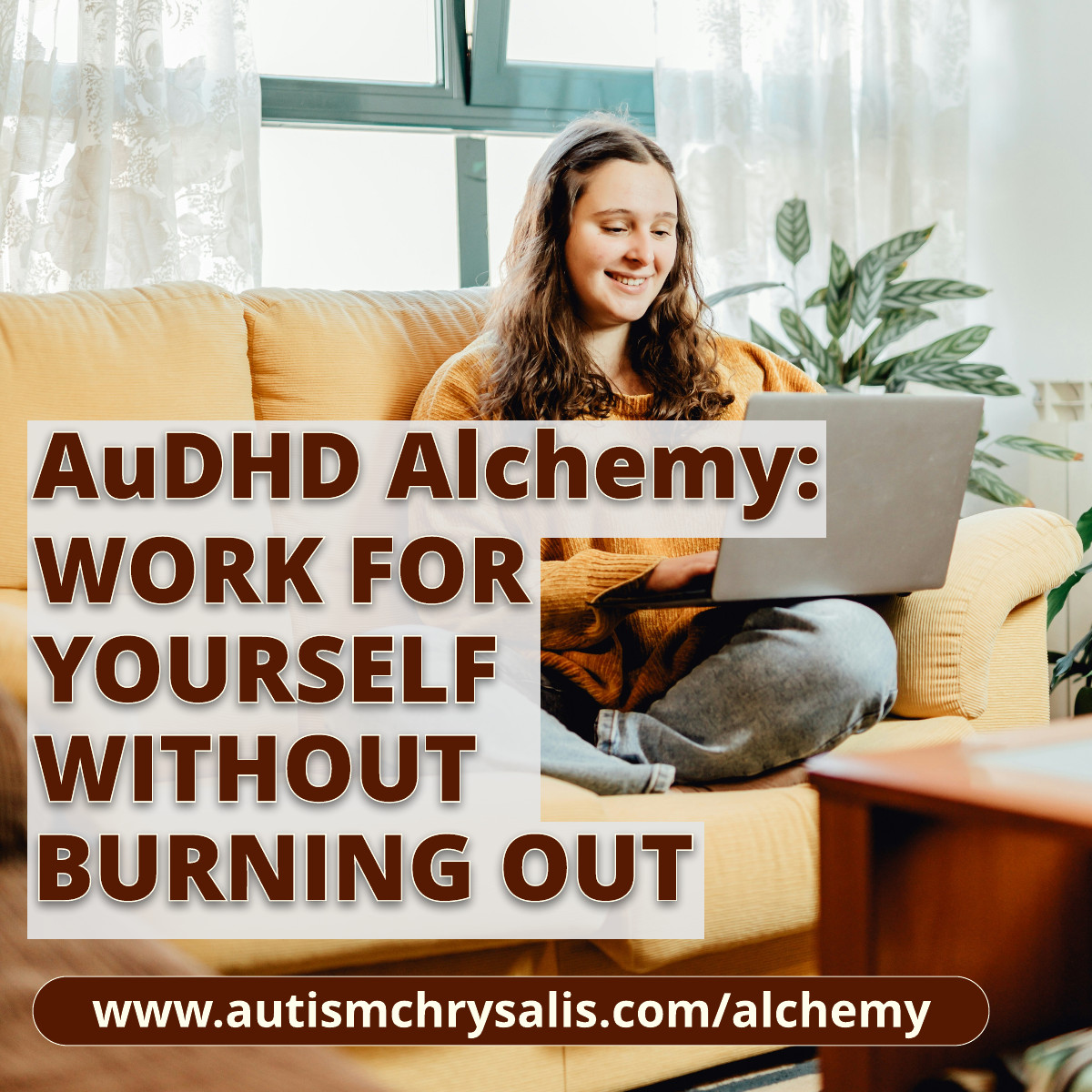
AuDHD Alchemy: Work for Yourself Without Burning Out.
A new course from Autism Chrysalis.
http://www.autismchrysalis.com/alchemy
For self-employed Autistics and AuDHDers: How to build a sustainable, burnout-resistant business that works WITH your brain—without sacrificing your integrity, health, or profit. Whether it's your primary income or something you're building on the side.
Learn the formula in 7 weeks instead of spending years figuring it out the hard way.
- Executive function hacks
- Marketing without masking
- Pricing without anxiety
- Client boundaries that stick
Build a sustainable solo business that works WITH your brain.
_______________________________________
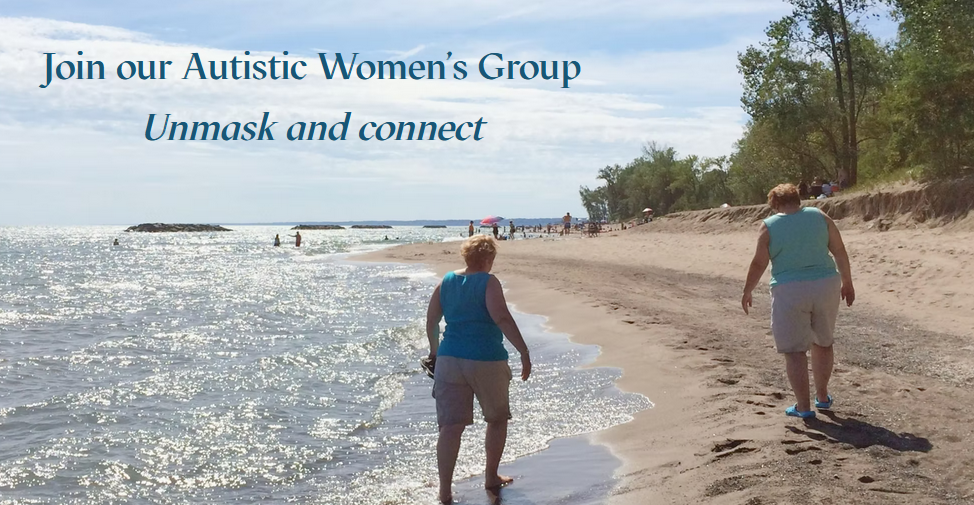
Unmask & Connect
A group for autistic and AuDHD women and gender nonconforming people
You're invited to join Unmask & Connect, a group for autistic and AuDHD women and gender nonconforming people who want a place where they can show up authentically as their true selves and connect with themselves and one another.
You'll be able to:
∞ Learn practical strategies for unmasking
∞ Share experiences without judgment or explanation
∞ Practice unmasking in a safe, supportive environment
∞ Build genuine connections with people you can relate to
Details
👥 Limited to 8 participants
🔒 Cohort-based to build trust and connection
💻 12 sessions via Google Meet
🏳️⚧️ Inclusive: open to cis and trans women; nonbinary, agender, autigender, and gender fluid people
🗓️Visit www.UnmaskAndConnect.com to learn more.
Two spaces in this cohort are reserved at no cost for AWG members. The standard cost is $147 for the full 12-week program.
Any questions? Email me at mary@audhdwomen.com or text me at 716-320-0220.
Bathrobe Comics
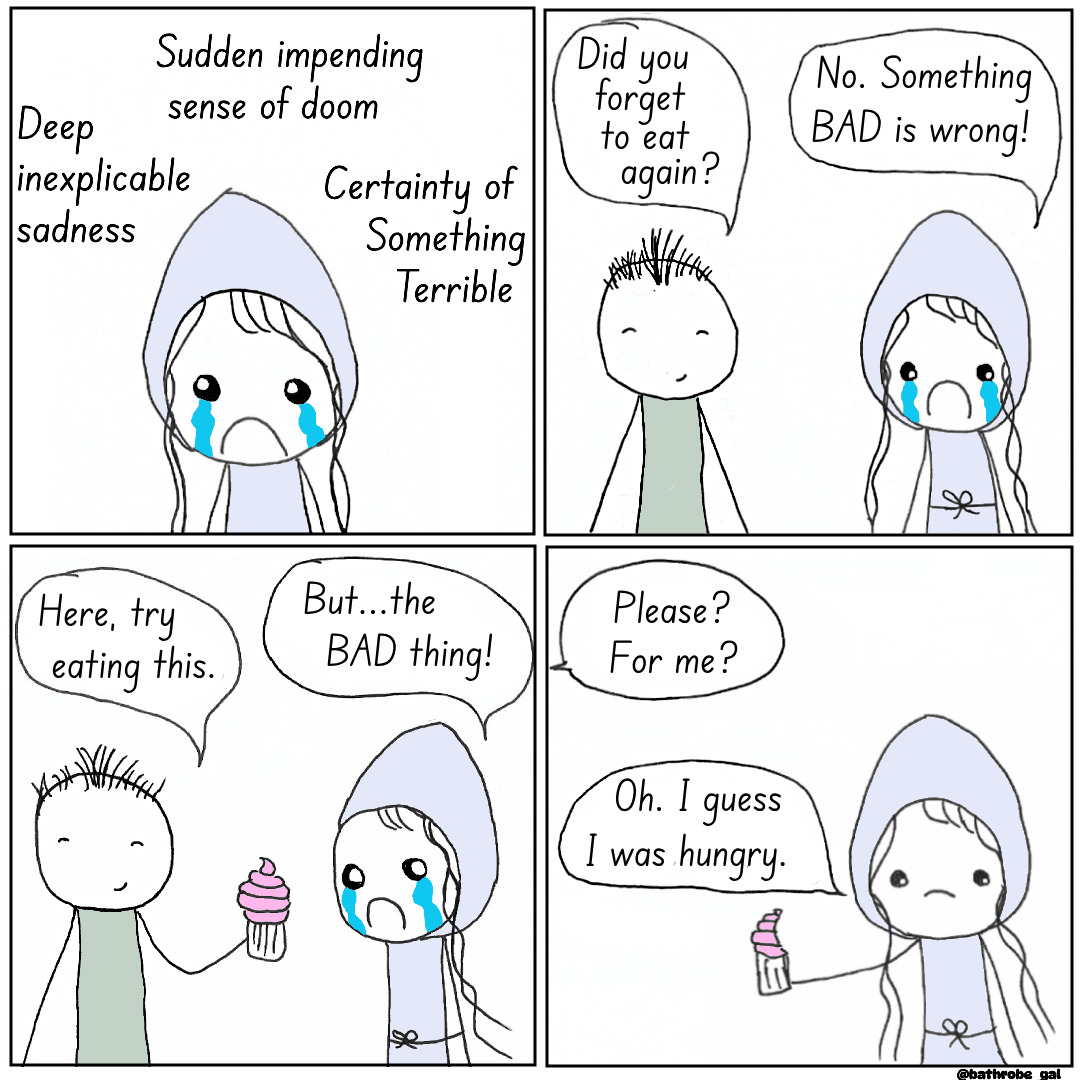
Once Again Fooled by Not Processing Hunger!!
Sarah Jane Cody
https://instagram.com/bathrobe_gal
First published on Jan 27, 2025, on the Bathrobe Gal website
Once again fooled by not processing hunger!! (This happens…a lot.)
Cake/candy is my favorite food.
Sticker
Neurodivergent
Elissa Fox