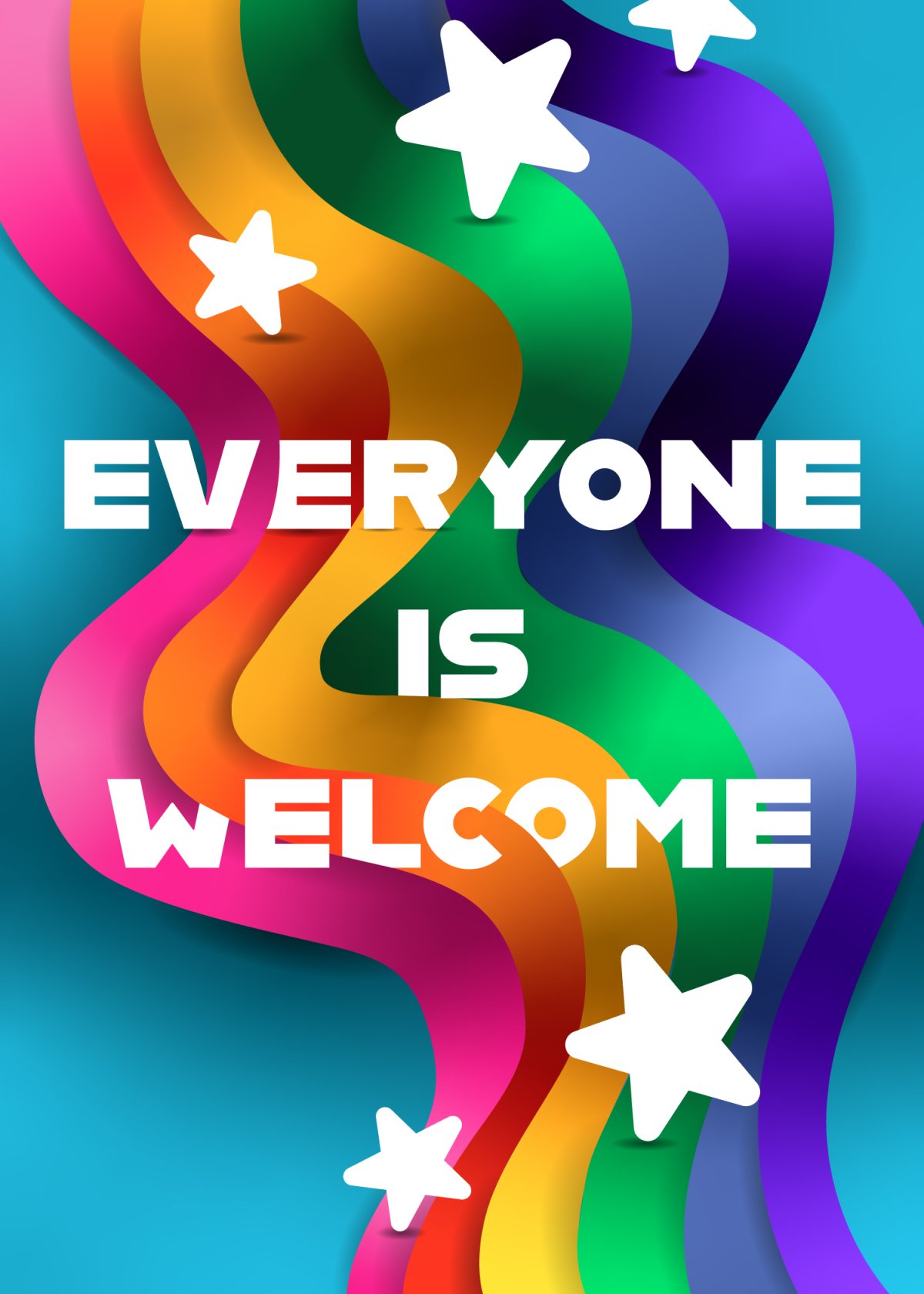
May 2026

Contents
May 2026 • Vol. 2, Nr. 5
Editorial Dept.
Annie Mydla
Sol Iacob
Cover
by Molly Madeleine
Annie Mydla
Sol Iacob
Cover
by Molly Madeleine
by Annie Mydla
by Annie Mydla
Poetry
Untitled Poem
Untitled Poem
by Christina Donaldson
Essay
by The CVI Perspective
Photography
by Amanda Casas
Business Promotion
by Heather Cook
Visual Art
by Jess Telmanik
About Autistic Women's Group
Established 2021
AWG is an online support group for late-identified autistic women and all other members of marginalized genders.
The meeting format is designed to reduce the sensory, social, and executive function burdens that normally come with socializing. Our members are clinically-diagnosed, self-diagnosed, and questioning. AWG is volunteer-led and not associated with any other umbrella organization or company.
Please consider joining us on Zoom. Our member profile is inclusive. Meetings are always free and no registration is required. Members share by speaking or typing. We have many members who come just to listen. You never have to turn on you mic or camera if you don't want to. You don't have to come to every meeting, or stay the whole meeting, in order to be a full member. Disclosure of diagnosis/gender identity is welcome but never required for participation.
Click her to learn more about attending a meeting. You can also...
- See upcoming meeting topics
- Sign up for meeting reminders (scroll the homepage to find the signup form)
- Join the AWG subreddit for weekly meeting reminders
- Join our sibling meetings: the AWG Self-Esteem Group, Book Club and Connecting Hour, and Discord server
I hope you enjoy AWG Shares Magazine. And please do join us in a meeting sometime if you can.
Annie Mydla
Founder and facilitator, AWG
About the cover
May's cover is designed by Molly Madeleine, based on Molly's original photograph.
We are always in need of covers! Submit a cover, or an image that you would like to see on a cover, at https://autisticwomensgroup.com/submit
Poetry
Christina Donaldson
Peace sits at my side.
It is not something I must seek,
or search for.
It it not something I must try
to attain.
Peace is something I must welcome.
So I turn towards peace today,
and give it a nod.
Reprinted Essay
An Open Letter to all parents, professionals, and other loved ones of folks with Cerebral Visual Impairment (CVI)
Editor's note: This is a reprinted article from The CVI Perspective ( https://thecviperspective.wordpress.com/home/ ). The CVI Perspective is a blog for people with Cerebral Visual Impairment (CVI) to share about their direct lived experiences, and to provide awareness of CVI from the perspective of those living with it. Cerebral Visual Impairment, as the name goes, is a form of visual impairment linked to how the brain processes the image, rather than an issue affecting the eyes. As such, CVI is a spectrum with multiple dimensions of visual struggle, and a fluctuating disability depending on context, energy levels, etc.
CVI is a generally underdiagnosed condition, and it overlap with autism in several ways. It is more common among autistic people, as well as being often misdiagnosed as autism, or potentially overshadowed by it. The letter below, about late-identified CVI, presents striking similarities with the experience of late-identified autism, for example when it comes to dealing with normative (rather than supportive) expectations and interventions, the cost of masking one's true brain function, or the psychological experience of a late-identification.
An Open Letter to all parents, professionals, and other loved ones of folks with Cerebral Visual Impairment (CVI)
From an Adult with CVI.
I have read countless resources on CVI. The recurring and overarching theme is about how to push CVI children to see as much as possible: whether it’s putting yellow mylar on doorknobs, or incorporating a red spoon into the child’s life so the child will learn to associate their visual cortex being stimulated with food, or reducing visual clutter in hopes the child will recognize their favorite toys visually, or showing them face after face after face, and so on and so forth.
All of these resources have one thing in common: tons of pressure on CVI kids to be as sighted as possible.
The first time I met another adult with CVI, we spent eight hours straight – yes, eight consecutive hours – swapping techniques that we had both used to pass as sighted.
Not tips on how to see things better. We both agreed that, even during our strongest visual years, trying to use our eyesight had always been exhausting, confusing, frightening, and straight up traumatic. We swapped tips on how we used our other senses so that we could fool people into thinking we were seeing things.
We learned how to hold onto a million other small pieces of data, and how to do constant mental math, moment-by-moment, so that we could calculate everything and all the pieces would add up to the illusion of seeing. Constantly running extra algorithms behind-the-scenes, carrying a heavy cognitive load, operating delicately under a thick blanket of anxiety sewn with threads of “What if I misjudge where I thought I heard that footstep was and my foot lands in a hole or crack instead?” “What if my eyes are pointing in the wrong direction?” “What if a ball hits me in the face, again?”
It was our only way of reconciling a world of being blind when no one around us knew we were blind. Not eye doctors. Not our families. Not a single soul. For years and years on end. Try to imagine being blind in a world made for sighted people, with no accommodations, no support, no understanding.
Our techniques were learned by force, not by choice, from a lifetime of pressure and dire consequences. The stakes were high to get it right. Sheer survival. We swapped stories of the consequences of when we failed to perform sightedness — from people assuming we were staring at them to “check them out” when we weren’t registering any part of their anatomy visually, to severe punishments when we didn’t successfully simulate eye contact just so.
We swapped stories of the consequences when we got “too good” at performing sightedness, too — people being convinced we were making eye contact when we were actually balancing their voices, believing we saw the couch when we had actually tracked and recorded the room layout kinesthetically, visually recalled the triangle on the visual memory test when we had actually processed it semantically as the Greek letter delta so that it wouldn’t slip away into an aphantasic void. THEY couldn’t see OUR layers and layers of mental calculus.
When we finally carved out enough space for ourselves, and gave ourselves permission to just be who we are, we were finally able to relax and melt into our natural world: our native language of Tactile. Kinesthetic. Vibration. The world that has worked for us all along.
The trustworthy, reliable world. We touch something and it’s there, and it’s tangible, secure, like solid ground underfoot. It makes sense. A language our brains can speak and feel. It is logical, familiar, informative, comforting.
We talked about the freedom of finally being allowed to be Blind. All the cognitive space that was suddenly available for other things. No more having to militaristically memorize every sidewalk crack on every route to avoid face-planting. We could just…trust our cane tip to show us. The amount of anxiety that lifted was indescribable. Enjoying reading for the first time ever when we both learned Braille, because we finally had brain-space to follow the story.
Guess where every single other person with CVI in my life has landed? Both those who qualify for blindness services and those who don’t. Living happily and successfully as a Blind adult, and in some cases, DeafBlind adult (often due to significant Central Auditory Processing Disorder or CAPD – CVI’s auditory cousin). Many of them have ended up there through being self-taught or taught by other CVIers since CVI has not been acknowledged separately, above and beyond how it sometimes intersects with acuity/field-based definitions of legal blindness.
Some still make use of their vision to an extent, just like some ocular-blind do, and some don’t. But the common denominator is that we all have non-visual techniques at our disposal. We are confident in our ability to function non-visually. Non-visual works every time. Whereas Visual is riddled with tricks and trapdoors, Tactile is surefire, failsafe.
Children with diagnosed CVI are at least fortunate in that their blindness has been identified. But even with a diagnosis, the pressure to function as visually as possible continues, decade after decade.
CVI parents and TVIs especially, this one is for you: please, let the child go with whatever is natural for them. If your child wants to use their eyes, they will. If they don’t, don’t force them to.
Tactile-Auditory-Energetic was always my native language, even when my ocular acuity was corrected. Not only was Eyesight a foreign language to me — but also, unlike actual languages, it wasn’t just a matter of learning it till I mastered it. I couldn’t master this one. It was like trying to hold sand in my fist. And trust me, I tried.
My classmates went to their after school extracurriculars. I went to the eye doctor. 4 vision therapy sessions a week for years. And even then, the exercises were all targeted at the oculomotor issues that often accompany CVI — not the CVI itself. At one point I was putting in THIRTEEN HOURS A DAY into vision rehab.
Did I see any improvements? Yes, some. Mostly I came out with nifty party tricks, like the ability to constrict and dilate my pupils on command. Yet they came at a steep price: I had no life. Because trying to become sighted was my whole life.
And here’s the thing: from a practical point of view, all those hours have not served me. But you know what skills I do use, everyday? To do my job, to type this right now, to run errands, to live and love and connect and embrace all the reasons to be alive? Braille. O&M. AT. ILS. Blindness rehab.
I continue to see this approach from the overwhelming majority of parents and professionals of kids with CVI, and from most sighted people who surround CVI folks — friends, family, etc. All the CVI blogs and textbooks I’ve read, the webinars I’ve taken, the emails about workshops I’ve passed on. Every activity and strategy revolves around stimulating their visual system and trying to get them to see stuff.
Why?
I wish I could put into words just how traumatizing this attitude is for so many CVI folks. Every CVI person that I have had a heart-to-heart shares agrees with me. How would you feel if your whole life was a never-ending eye exam?
Don’t get me wrong. If an individual with CVI wants to maximize visual functioning for themself, and they decide they want to put in all that time and effort into seeing, I support them 100%. As long as it is truly self-driven.
But how often is it self-driven? If you are a parent or TVI, when is the last time you asked your CVI kid what they wanted?
When you have CVI, seeing is not passive. Anything sight-related is active WORK. Relentless, grueling WORK. Tons of effort, very little payoff. It is always a big deal.
Do you let your kid opt out of searching for the face/mylar? Do you let your student close their eyes so they can really focus on what you’re saying? When is the last time you have let them say “not today”?
Please, let your children and students choose what world they want to be in. And please, let them have a life. Let them have friends and interests and activities and hobbies that don’t constantly revolve around this goal to see, see more, and see better.
Give them non-visual tools. Let them step into the visual world on their own terms, if and only if they so choose.
If your child wants to use their eyes, they will do that naturally. They will seek visually if that is where their interest lies. But if the photons of light that hit their retinas come in as such a jumbled mess of nonsense that they decide to retreat to a safe and reliable non-visual world, let them do that, too.
It doesn’t have to be one or the other. Some will explore both, if they want. They will move seamlessly between both worlds depending on how their brain and the environment and a million other factors, internal and external, intersect in a given moment. Maybe at times they will be visually curious and at other times they will absolutely need to tune out visually. Those are all options.
Some will be visually intrigued, but will still intuitively know that it’s not actually useful input for doing things — in the same way the intricate patterns and colors of a kaleidoscope may be fascinating and pretty to look at, but kaleidoscope-vision is outright terrifying and dangerous to rely on when it comes to crossing a street or hopping onto a train.
Whatever the case, just let them be. Your child will instinctively know if, when, and just how much they can trust the data landing on their eyeballs. They are the experts because there is only one person who is living with their brain inside their skull: them. No TVI, no parent, no other being, not even another person with CVI (because CVI is so complex and varied) shares their reality. It doesn’t matter how well you know your child or your student, you can never fully know their experience.
And no matter where they fall on the spectrum, they have a right to choose non-visual techniques, too. That includes Phase IIIers, and folks who score 9.5 on the Roman-Lantzy scale. And people with episodic blindness. And those with brain injuries that have milder effects on their vision. Because seeing is still a chore for them, too, and they also deserve breaks.
Being sighted is beautiful. Being Blind is beautiful. And all the space in-between is beautiful, too. Please, present your CVI child with options, and then give them the freedom to choose.
Your CVI child will grow up to be an amazing CVI adult either way.
Please note: To anyone responding, this is one of the most vulnerable and painful things I have ever written about. But I just could not go a day longer without saying something. Please be gentle and kind in your reactions. And keep in mind this topic is a deep wound for many CVI people who will be reading your comments.
Note: The CVI Perspective is currently open to submissions from people with CVI, including people who read this letter and found it representative of their experience. Submissions can be sent to: thecviperspective@gmail.com
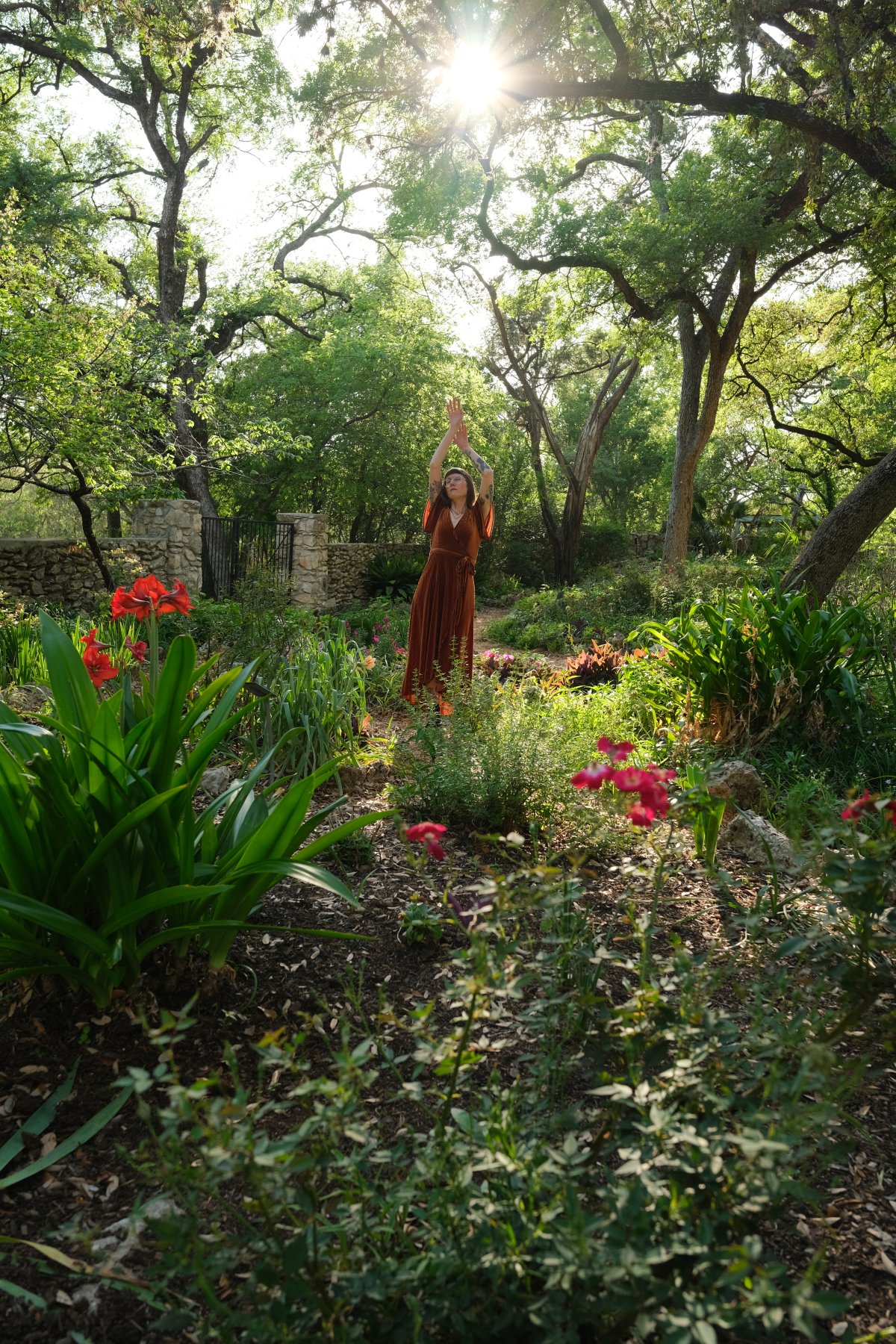
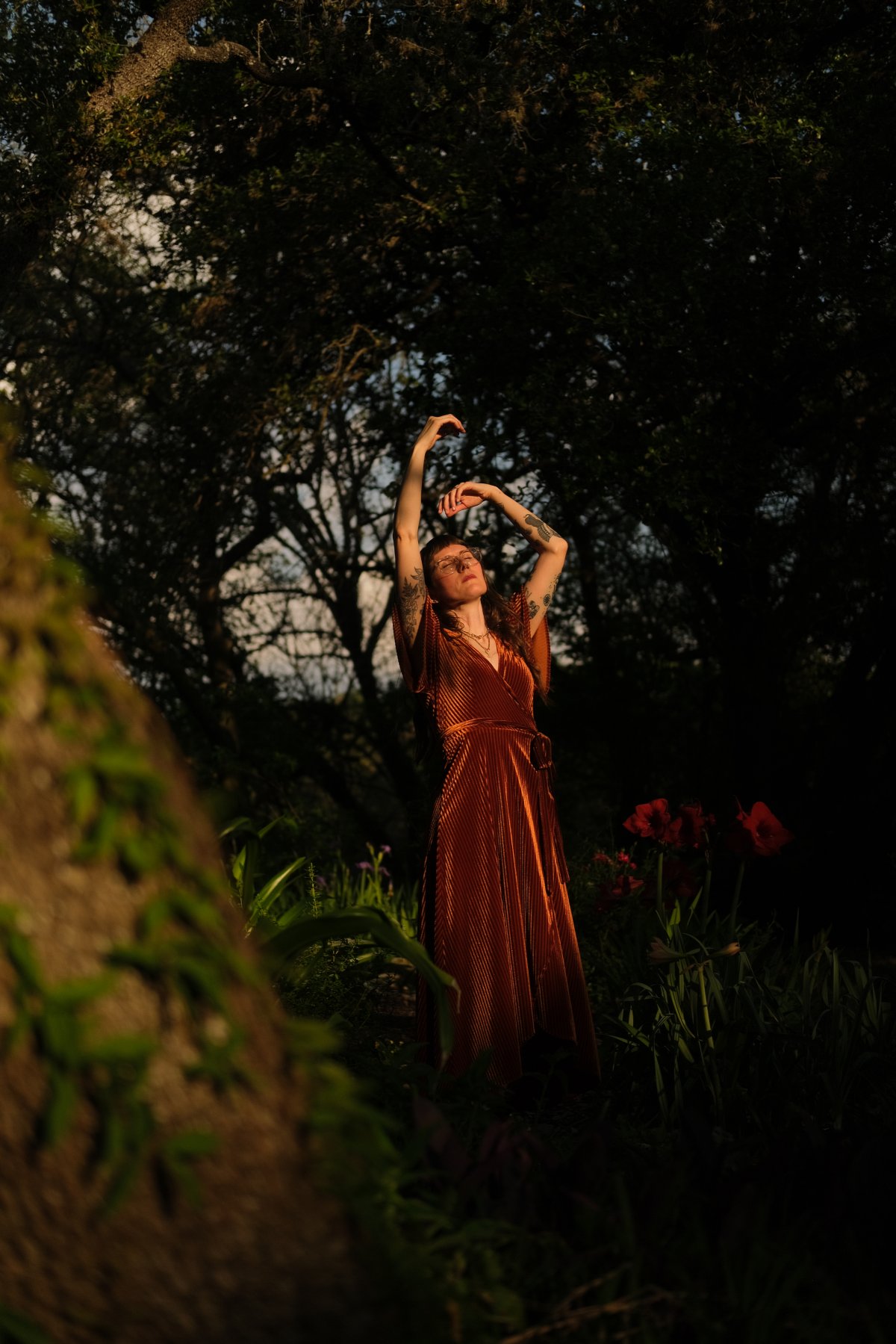
Photography
I am a photographer who celebrates feminine energy, creation, expression, and authentic representation. My passion is in creating safe spaces for people to be fully themselves, unfiltered, and to feel seen and reflected honestly—just as they are. Each person is so unique, and so beautiful, and so worthy of being loved and celebrated. Photography has equally given me a voice and outlet for self-expression, and has been teaching me that I, too, am worthy of being seen. As an AuDHD woman, one of the few times I feel fully present, connected, and at peace is when I'm behind my camera.

Want to promote your business, product, or service in AWG Shares? You can!
Promotions are free for everyone who fits our member profile.
Your business doesn't specifically have to be about autism,
but must be welcoming to women and non-cis people
(FTM/MTF trans, nonbinary, genderfluid, autigender, and more).
Email awg@autisticwomensgroup.com or use the submissions form and we'll set up your promotion for the closest upcoming issue.
Business Promotion
Autism Chrysalis
by Heather Cook
Warning Signs of Autistic Burnout
Common warning signs.
Here are some common warning signs that autistic burnout coming soon, or that you’re in it.This list came about because someone on Twitter asked me about warning signs in reply to my tweet about autistic burnout, and I couldn’t stop thinking of answers. A lot of this I personally experienced during my two major and other minor burnouts, and some are experiences common to my clients and other autistics I know or read. (Here’s this same list on Twitter.)If several of these resonate with you, you might consider that what you’re experiencing may be autistic burnout. Keep in mind though, that while someone may experience many of them, probably no one will experience all of them. So if some do not apply to you, that doesn’t rule out burnout.One last note. Whenever I use the language of comparisons (more, increased, longer, etc), your own personal best functional time in life is meant as the baseline. This is NOT a comparison to others, this is in comparison to you alone.
Now the list.
In no particular order:
Low energy. Exhaustion.Sleep disruptions, lack of sleep, or sleeping all the time without feeling rested.Getting sick easily. Taking longer than usual to recover. Decreased motor control or coordination, especially for detailed tasks.Dropping or bumping into things more frequently.Minor, or major, injuries or accidents.A feeling that you “have to” do things.Increased black and white thinking, all or nothing thinking. Getting frustrated more easily, at more things.Increased negativity.A sense that the world is going to pot.You become the toxic person that people start to avoid or complain about.(I want to comment on this one briefly. What I don’t mean is that you’re more direct and irritable than usual. That can damage relationships, but it’s not the same thing as toxic. But sometimes when we have no energy left to give, and no energy to care about others, and when we don’t have other, better ways to get our needs met, we can resort to excessive, controlling manipulation, hurting, and abuse to try to protect ourselves.)
Okay, back to the list:A track record of accomplishments without feeling good about them.Not being satisfied with all you have done.You’re worried it’ll never be enough.A strong drive to keep going even when you don’t have energy, eventually turning into not caring whether you keep going or not.A strong, visceral, negative reaction to any suggestion to take it easy, relax, do self-care, take time off.Decreased access to your emotions. Not remembering whether you ever had access to your emotions.Being certain you never did.It’s harder to tell when you are tired, sleepy, hungry, full, etc.It’s harder to tell whether you really want to be on Twitter, gaming, sleeping, or whether you’re doing things out of habit.Having less access to what your body feels in general.Sensory sensitivities get more intense, worse, harder to deal with, more frustrating.
It is harder to believe that they’ll ever get better.Overwhelm is always a breath away.Or nothing feels stimulating enough to be satisfying.Meltdowns or shutdowns are always imminent.Brain fog.Memory issues. Forgetting details of your special interests that you never would have before.More frequently forgetting words for common objects, the word is on the tip of your tongue feeling.Decreased facial recognition.More reliance on escapism, dissociating, video games, overeating, alcohol, drugs, etc.Getting on peoples cases about what they do or say, how they act around you.Arguing more with people, online or IRL, who disagree with you.Less tolerance for people having different opinions.The conviction that if people just did what you said, it would be so much better.Trying harder than ever to control other people. Isolating from other people, often in gradual increments so you don’t notice until people start pointing it out.Being more of a hermit than usual.Answering phone or text messages even less than usual.The more people get on your case to do things, the less you are able to do.The more you try to do things, the more problems there are and the less well they turn out.More and more people suggest that you need help, whether or not you believe them or want it.You’ve probably tried many things over the years that haven’t helped, and are more convinced than ever that nothing will ever work.Keeping your living space clean or tidy is becoming a bigger and bigger problem.Small tasks feel huge.Every little thing seems like a gigantic undertaking.Decreased executive function.More reliance on routines. Disruptions cause more stress.More problems at work. Losing work. Trying a job and not managing. Even part time may be too much.Or not being able to stop working, ever, even when others suggest you should.People are harder.You’re more likely to blurt out the “wrong” thing without thinking.May be less likely to care about whether they care.More direct language.More likely to give your real opinion, bluntly.Loss of ability to speak, sometimes or at all.It gets harder, and then impossible, to mask.Any existing chronic illnesses get worse, flare up, or have increased pain.Some people make large scale life changes without any warning to themselves or others. (This is sometimes a subconscious drive to get away from energy drains before it gets too bad, and may be a good thing.)A feeling that the world would be better off without you.That you’re just a drain on resources.That you’re not adding anything good to the world.That it’ll never get better.Suicidal thoughts, with or without an intention to act.A feeling of hitting a wall. Everything feels harder.Making phone calls is *even* worse/harder/impossible.Panic attacks. Increased anxiety.Anti-depressants having no (useful) effect.Common misdiagnoses include:
- Bipolar
- Depression
- Adrenal fatigue
- Laziness
- Selfishness
- A worsening of other pre-existing conditions
- “It’s only in your head.”
- PTSD or CPTSD
Nevertheless it is ALWAYS worthwhile to check with a doctor to rule out a medical explanation, as the above symptoms can also be signs of your body struggling to cope with physical or mental health challenges.If these resonated a little too much with you, and you’d like some strategies and support getting out of autistic burnout, from someone who’s been there and done that, and has managed to systematize it for the neurodivergent brain, I’ve put together a course that does exactly that, and you can get more info here.I hope this has been useful for you.And I wish you a neurowonderful day.
Visual Art
Love is Love
by Jess Telmanik